The short answer is that they are conscious breathers and therefore sleep in different ways than land mammals (like us). We are unconscious breathers, so our bodies automatically breathe to take in air even when we are sleeping. Cetaceans are conscious breathers, meaning that they have to make a decision on when to breathe. This might seem complicated for an animal that spends all of its time in the water, but whales and dolphins are experts and are well-adapted to spending their entire lives in the ocean.
All whales and dolphins sleep, but different species have different methods and requirements for sleep and rest. The length of sleep can vary massively between species. There are some common methods and positions for sleeping. These include simply resting quietly in the water, either horizontally or vertically, or sleeping while slowly swimming next to another member of their pod or in small groups. Dolphins in captivity have been recorded sleeping for brief increments of time at the bottom of their tanks. Humpback whales are often found resting motionless on the surface of the ocean while sleeping. They cannot sleep for much longer than 30 minutes without risking lowering their body temperature due to inactivity.
A very common assumption is that whales sleep with half of their brain ‘shut off’ and one eye closed. The theory is that they do this to maintain an awareness of potential predators or threats that may approach. It is thought that this also allows them to remember to breath at the right time. This behavior has been reported in many different types of dolphins, who can sleep for 2-4 hours at a time. Some dolphins sleep for roughly 33% of the day, while the larger sperm whale is thought to sleep for only 7% of the day!
Boating encounters with sperm whale pods suggest that they enter a deeper sleep than dolphins. In 2008, a small group of scientists working off the coast of Chile happened to encounter a pod of sleeping sperm whales. They were working to record sperm whale calls and were below deck with the engine off when they discovered that they had drifted right into a pod of sleeping sperm whales. It was not until the boat accidentally nudged one of the sperm whales that they noticed the presence of the boat. This is suggestive of a deeper sleep with less acute awareness. The sperm whales swam off and resumed their sleeping.
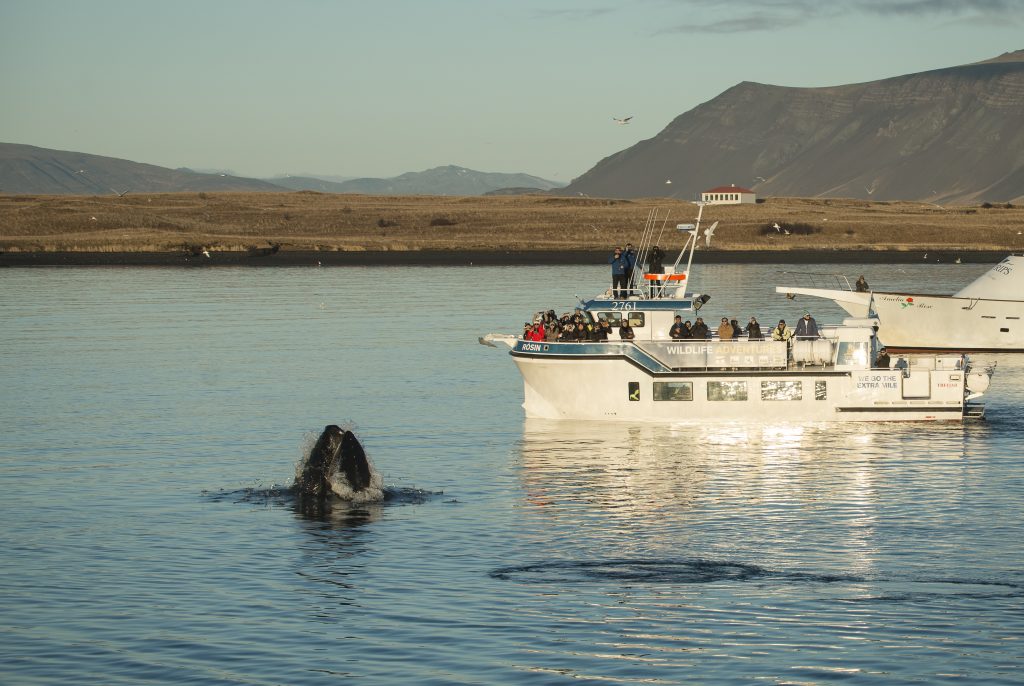
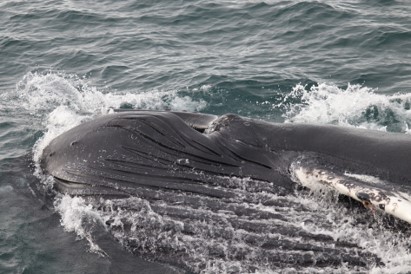
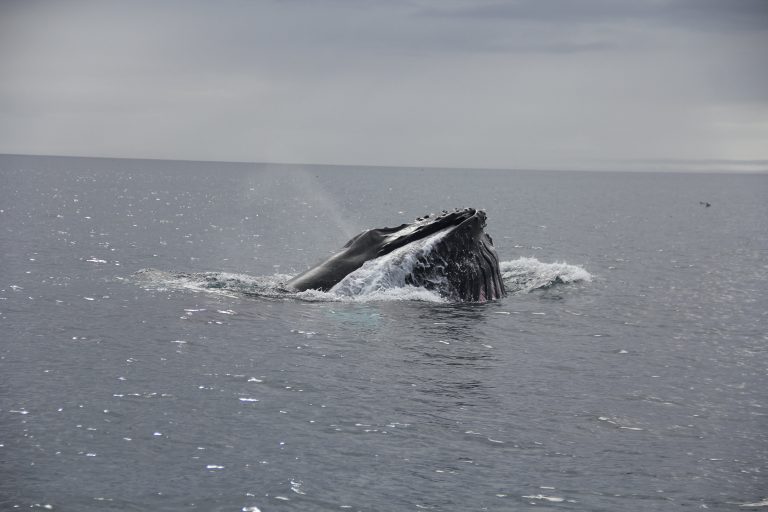
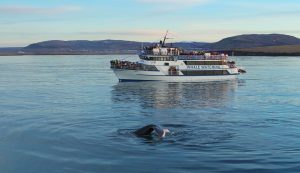
It is notoriously difficult to study cetacean sleeping behavior in the wild. There is still much to learn about the sleep requirements and patterns of whales and dolphins. We have encountered sleeping whales before on our Whale Watching tours, though it is not common. One one of our morning tours in April, 2015, our boat came across a sleeping humpback. We observed the whale resting just below the surface, coming up every few minutes to breathe. It did not seem to notice the boat and we had the chance to closely watch this gentle giant – a unique and exciting experience!

A pod of sleeping sperm whales. Image: © Franco Banfi/Solent News & Photo Agency
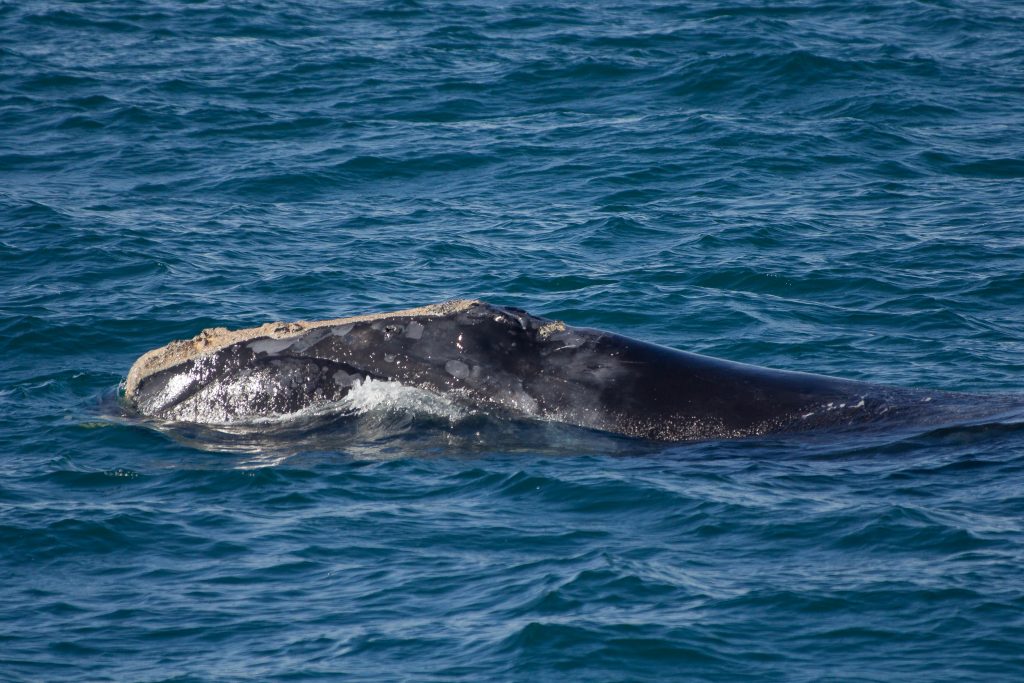
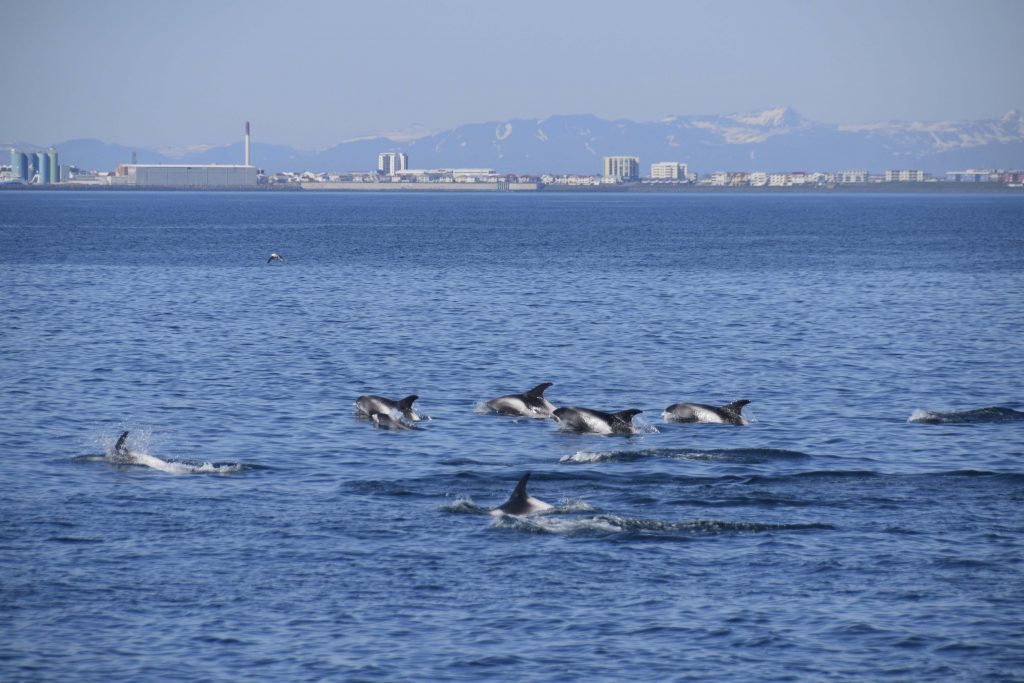
Special Tours has been operating whale watching tours from Reykjavík for over two decades. In that time we have had the privilege to meet countless whales, with species including humpbacks, minkes, white-beaked dolphins, harbour porpoises, orcas, and even some rarer species like the blue whale, fin whale, and the North Atlantic right whale. Each and every encounter with a cetacean is a special and valuable experience, and we are so thankful that we get to share these experiences with our passengers.
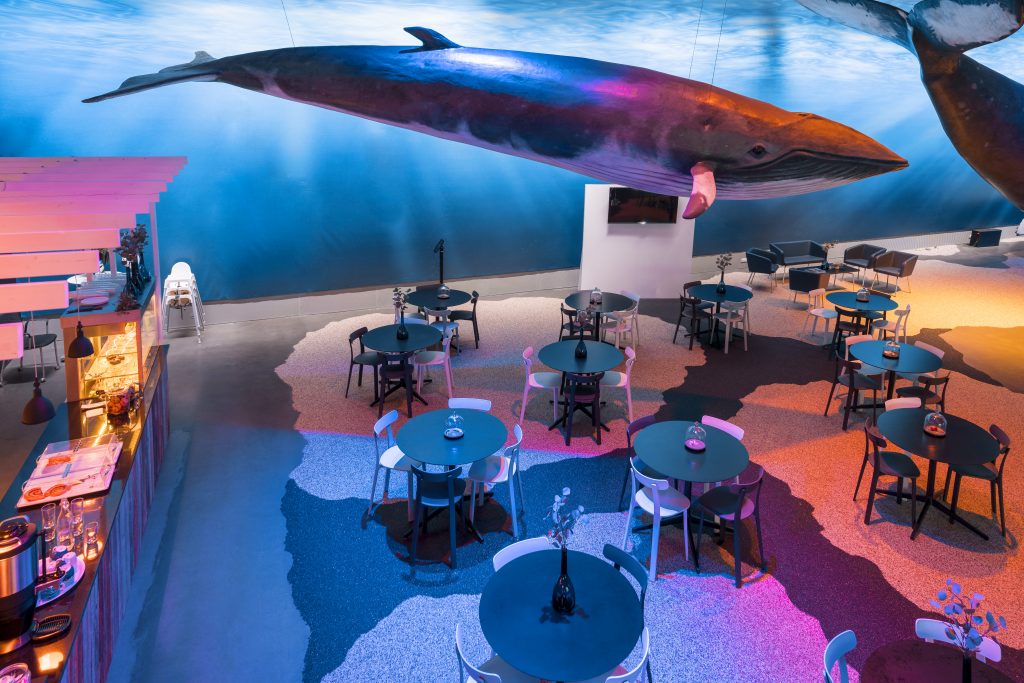
Conservation and education are both critically important to us. In addition to providing in-depth information during our tours, we work on educational projects with Whales of Iceland in partnership with IFAW, IceWhale, and other tourism companies and organizations. One of our favorite projects is the Fin Whale Room at Whales of Iceland, which focuses on marine conservation. This exhibit looks at the variety of threats that whales face today, and what solutions are available.
Since we cannot be out at sea today, we’re looking back at some of our older photos like the ones below. Whale Watching is not only fun, but also plays a key role in educating people about marine life and the crucial function that whales have within marine ecosystems.


If you have been on one of our whale watching tours from Reykjavík, on board of Andrea you know that we emphasize on education during the tour. There is for example a small onboard museum in the bow. This is where we sometimes display our plankton sample. We take the sample, with our plankton net, while we sail out in the direction of the whales feeding grounds, in Faxa bay.

What is this magic plankton and why is it important for us, you may ask?
Plankton describes a diverse collection of organisms that are driven by the current. In this blog, we emphasize on phyto- and zooplankton. At the beginning of the marine food chain stands the phytoplankton, single cellular microscopic algae. They are found almost everywhere in the surface layer of the ocean. It is imitated by sunlight and nutrients such as Iron, Nitrogen and Silicate. The nutrients are mainly found in the depth while the photosynthetic active light only penetrates the uppermost layer of the ocean. And that makes our bay, Faxaflói, so productive, it is very shallow. In the winter when the level of sunlight is low there is an intensive mixing going on bringing the nutrients up. Diatoms typically dominate the phytoplankton spring bloom over the Icelandic shelf and afterwards Dinoflagellates increase in abundance. If the conditions are favourable other groups such as coccolithophores multiply rapidly and colour the ocean such as Emiliania huxleyi does every year – that can be seen from space!

In our petri dish on board, we display the zooplankton, in Icelandic water dominated by the copepod Calanus finmarchicus. The biomass in the upper layer is on average 2-4 g dry weight m-2. If you want to read more about the connection of whales and plankton have a look into this blog article.


The trace nutrient Iron is limiting the phytoplankton bloom by 30% in the world’s ocean so called high nitrate low chlorophyll regions (HNLC). In the year 2010 this was for once no limiting factor in Iceland.
On the 14th of April, the volcano Eyjafjallajökull erupted, in the south of Iceland, causing ash to deposited across up to 570,000 km2 of the North Atlantic Ocean. This input of dissolved Iron increased the algae bloom by about 20%.
Life of the minke whale in Iceland has changed dramatically in recent years.
Faxa bay, our whale watching site, became partly a whale sanctuary in 2017. Therefore, hardly any minke whales (Balaenoptera acutorostrata) were hunted in the following seasons. Finally, since the abundance of minke whales in the Icelandic continental shelf decreased by almost 23 percent in the last decade. By signing the petition by our partners, the IFAW you can help to ban whaling in Iceland forever.
The decrease of the population together with dietary changes, may reflect the responses of minke whales to a changed environment possible driven by global warming. In recent years, the Icelandic continental shelf ecosystem has changed due to the increase in sea surface and bottom temperatures. The cold-water species capelin almost disappeared and the stock of krill and sandeel broke in dramatically. Today minke whales consume mainly herring and haddock.
The food itself is not the reason why the minke whale is often called “stinky minke”. The digestive system composes of four compartments with a high density of anaerobic bacteria which digest the food and lead to the awful smell, but you want to smell it, that means it is a close encounter.

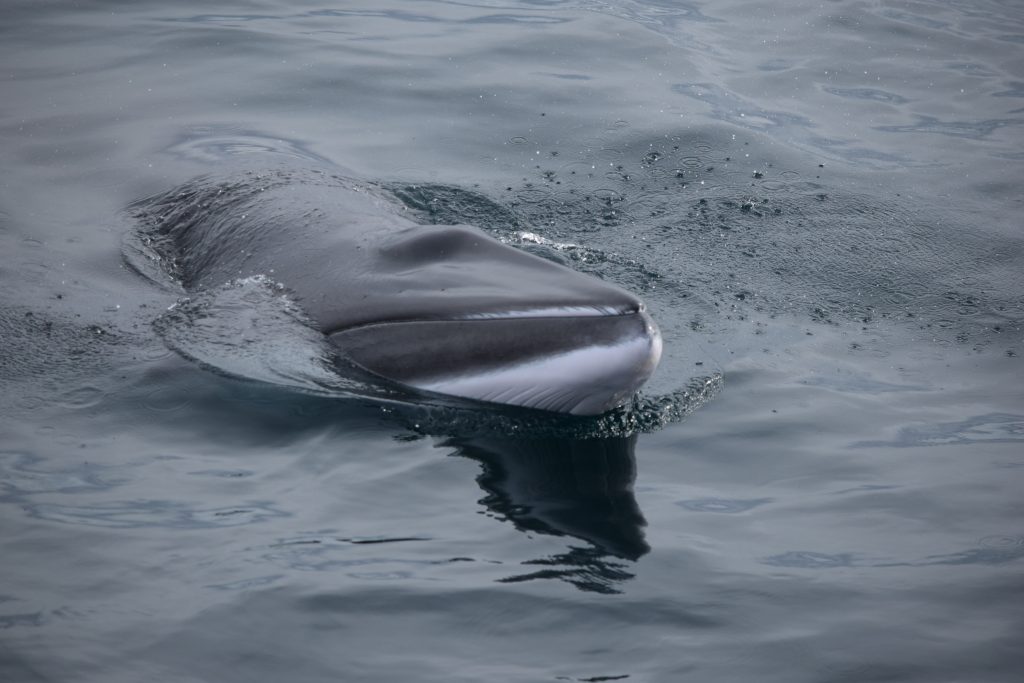
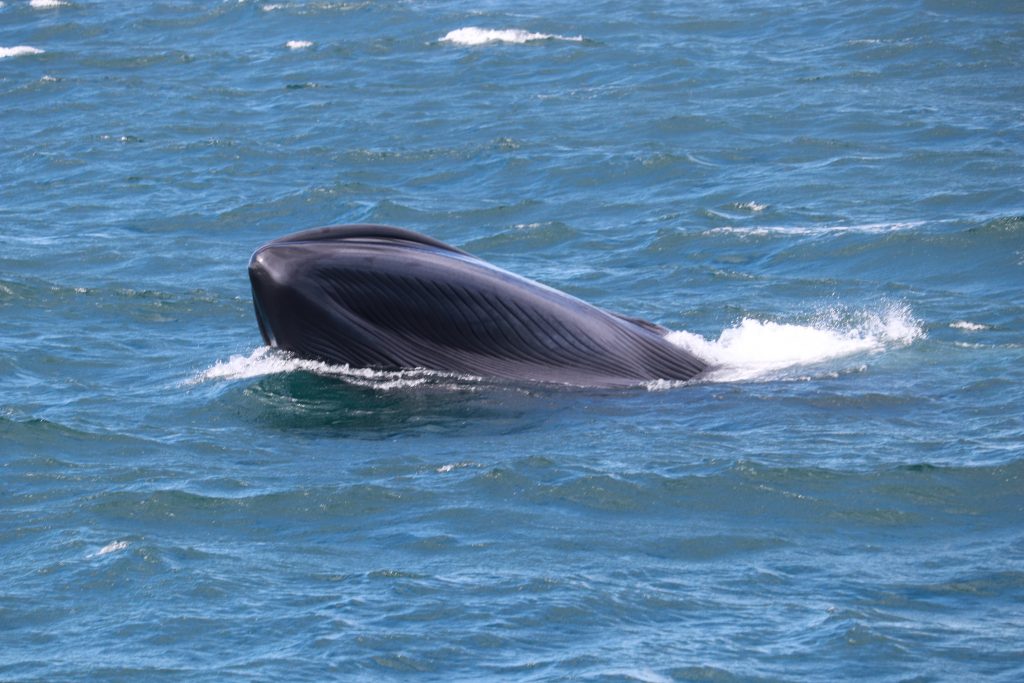
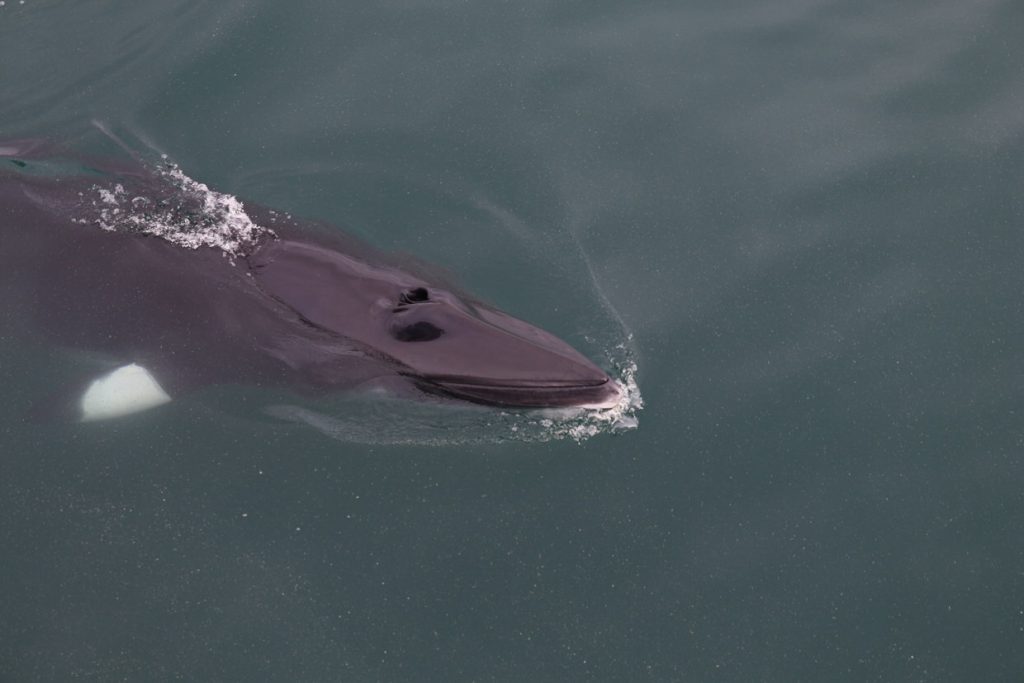
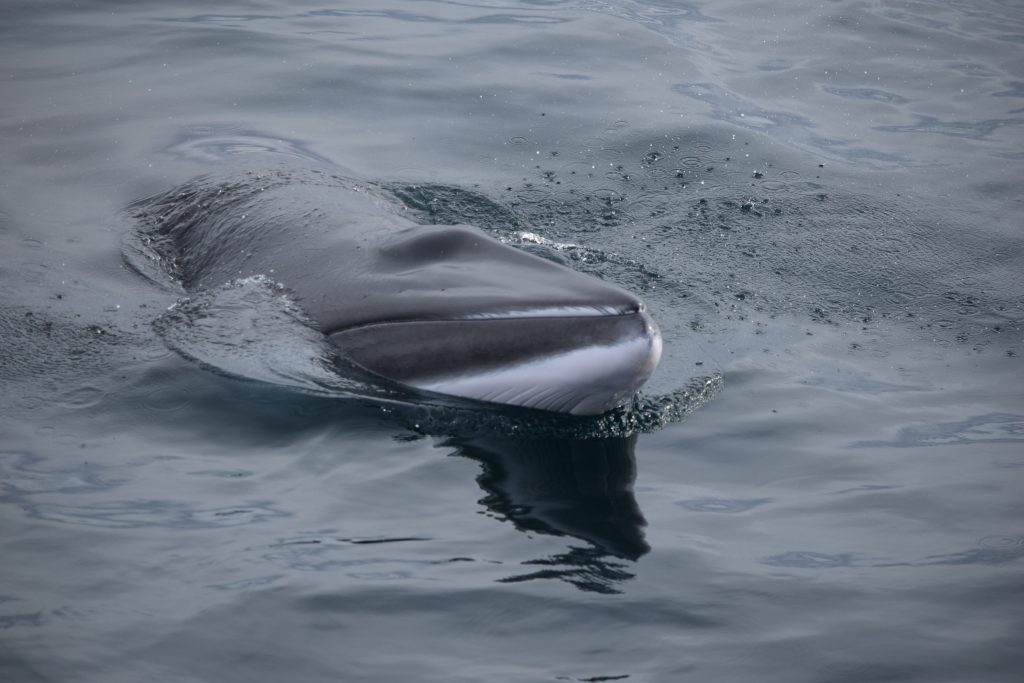
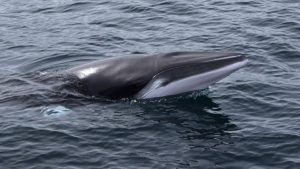
The minke whale is a baleen whale species. The common minke, whale here in the northern hemisphere, can be identified by the white band on their flippers. The back is usually black or dark grey while the belly is white. They can reach about eight meters with a weight of four to five tons. Minke whales have between 240 to 360 baleen plates on each side of their mouth. You can read here more about how they feed.
Since Faxaflói became a whale sanctuary we encountered significantly more curious young spy hopping minke whales. Normally during an encounter, the whale surfaces about three times before going for a deeper dive. While it surfaces to breath most of the length of the back including dorsal fin and blowholes appear.
The minke whale is fascinating, isn’t is? This is why our partner, the Whales of Iceland museum has an interactive minke whale to explore. In addition, you can drink a coffee sitting under a life size model of these beauties.

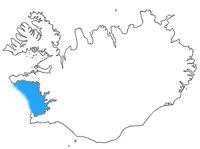
Are you going to visit us in Iceland? Do not be surprised, your airplane will not bring you straight to the capital, but to Keflavik, the city that is on the far end of our whale watching home, Faxa Bay. Faxaflói, how the bay is called in Icelandic, is the largest bay in Iceland, with an area of about 4500 – 5000 km2. In good weather conditions you can see both peninsulas that are surrounding the bay. – Snæfellsjökull is always worth a picture.

Faxaflói was named after a man named Faxi, who was part of the expedition of Hrafna-Flóki, the first man to deliberately sail to Iceland with the intention to settle here. They came from Norway and stopped over in the Faroe Islands along the way. Hrafna-Flóki captured three ravens there to help him find his way to Iceland, giving him his nickname (which means Raven-Flóki). When they arrived in Iceland, Faxi suggested that this bay looked like a good place to settle near, and they named the bay after him, but they sailed onward and settled in the Westfjords. At the time, the area was full of drift ice, so Hrafna-Flóki decided to name this land Iceland.

Whale sanctuary – Faxa bay
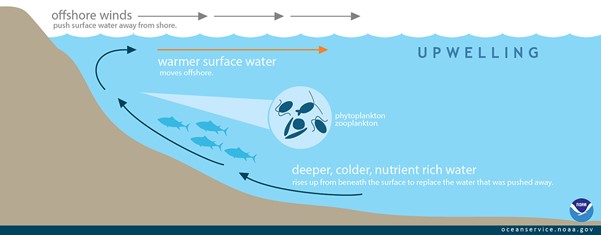
Part of the bay has been declared a whale sanctuary and this is where we head out for our whale watching tours. Faxaflói is open to the west, and off the south and west coast of Iceland, the nutrient-rich deep waters of the North Atlantic Current upwell near the continental shelf, bringing those nutrients to the surface. Because weather around Iceland tends to be unstable, this further mixed deep waters and surface waters, ensuring the nutrients in the surface layers are constantly replenished. This means that the waters around Iceland are perfect for the growth of phytoplankton, which support the entire oceanic ecosystem and provide the perfect conditions for a wide variety of life.
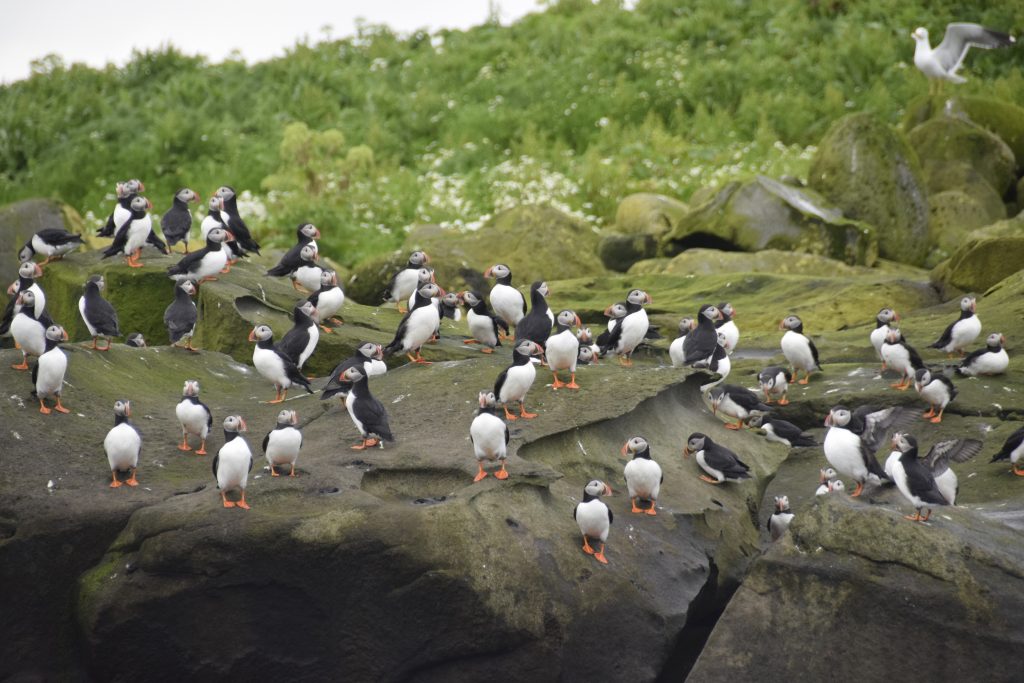
The first we see, when we sail out of the old harbour of Reykjavík are the five islands of the bay: Akurey, Engey, Videy, Lundey and Therney. The word Lundi that named one of them is the Icelandic name of the Atlantic puffin. Therefore, we are able to sail for our puffin tours within minutes to the second largest puffin population in Iceland.

Atlantic puffins – July 2018
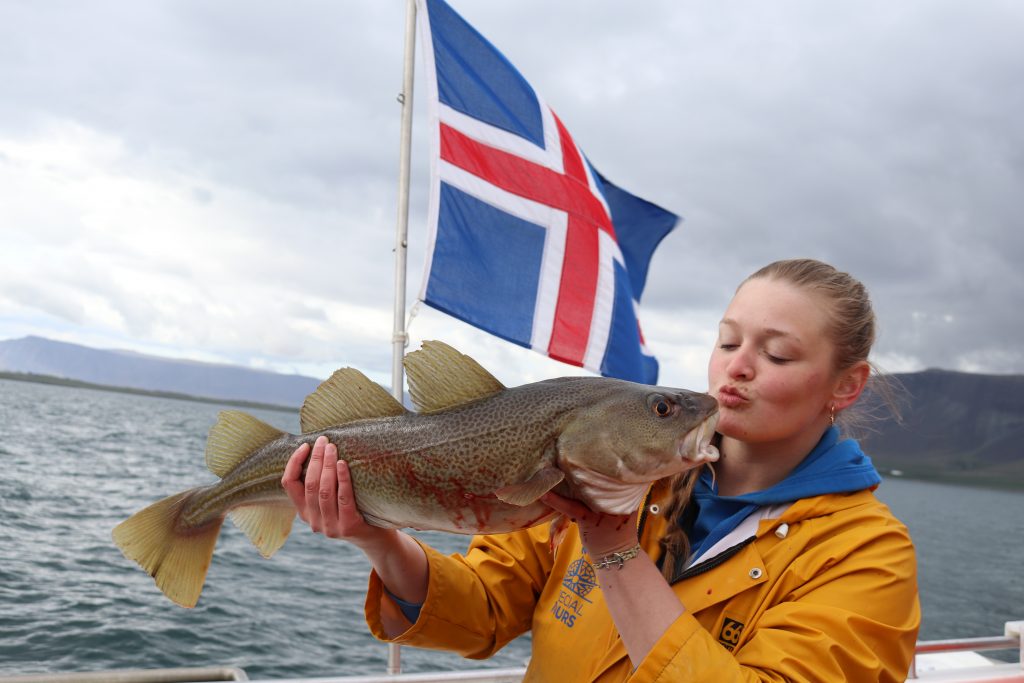
Humans have relied on fishing in the bay for thousands of years. The vast majority of the fish we catch on our Sea Angling tours are Atlantic cod, which are bottom-dwelling fish.

Sea Angling May 2020
Generally speaking, we will find 23 different species of both toothed and baleen whales all around the Icelandic coast. All these species have been recorded within the last 200 years. Whilst some species inhabit rather coastal areas, others prefer offshore habitats. In order, to understand a bit more about their distribution, we have to look a bit closer into the fact that some whales are migrating species, whereas others are known as so called resident species, meaning they will stay year-round. Latter will for example include some of the toothed whale species, that can be observed on our whale watching tours such as white-beaked dolphins, harbour porpoises and sometimes also killer whales. Species belonging to the baleen whales are rather migrating species and only a few will stay around the country in winter-time.
But let’s start from the beginning and check the different species.
Looking closer into the big order of toothed whales, we will find a higher species variety compared to the baleen whales. For example, all dolphin species, the harbour porpoises but also sperm whales, pilot whales, and all species belonging to the so called ‘beaked whales’ will be listed here. Depending on the area, season and time of day, the sightings will most likely differ.

Also belonging to the toothed whales is a family known as Monodontidae. Only two species will be found here, the narwhale and the beluga whale. Both species have been observed around northern parts of the country within the last two centuries, but being considered as generally rare sightings since both are circumpolar species. Nevertheless, there is a possibility to see some belugas nowadays, in a sanctuary located in the Westman islands (Heimaey) in the south of Iceland. The sanctuary was taken into operation 2019 and is aiming on providing former captive beluga whales with a natural environment.

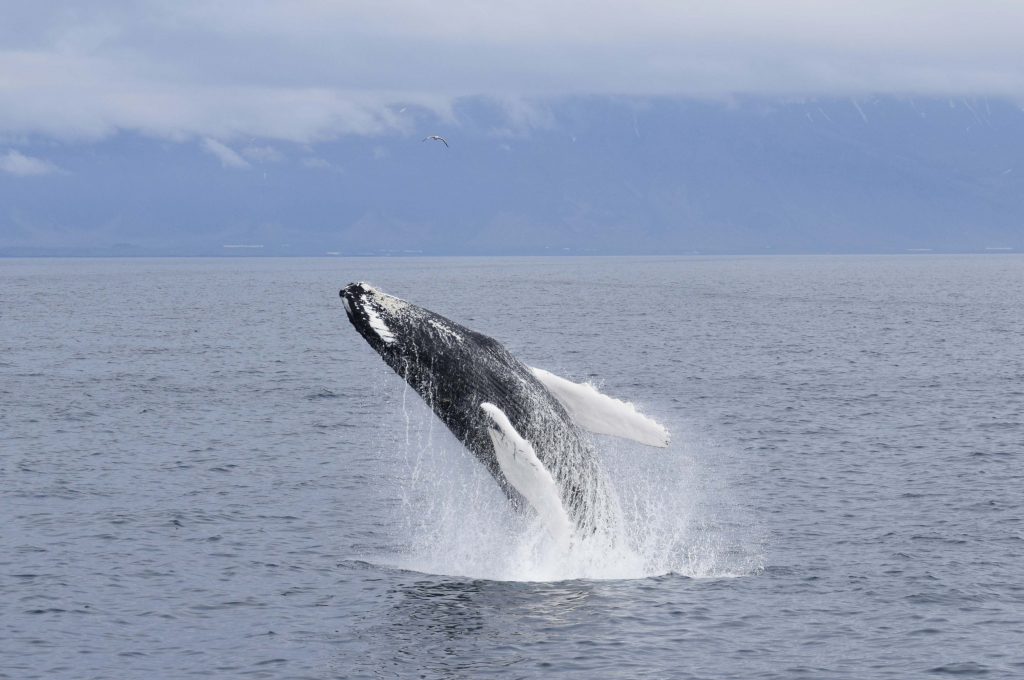
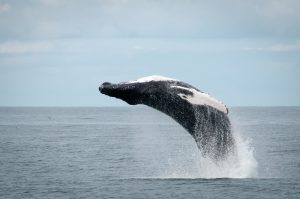
Breaching is known as a common surfacing behaviour for most of the cetacean species, where whales and dolphins leap parts or their entire body out of the water. Since breaching seems to be related to sociality, some species display a more frequent breaching rate than others. Especially, when pods or schools, tend to be larger, a higher percentage for this behaviour can be detected. For example, humpback whales, sperm whales and offshore dolphin species are well known to show a higher display than others. Nevertheless, precise reasons for this behaviour are not more than presumptions yet. Here, we go over possible reasons that help us answer the questions “Why do whales breach?”
Over the last decades, several plausible theories have been put out, being highly discussed by the scientific community worldwide. Let’s explore some of these theories:
The first explanation could be, that cetaceans use their bodies as ‘communicative tool’. Whilst hitting the water surface a massive splash will be produced and even more, the sound will start to travel off underwater. Since sound travels much faster in water (factor 4.4) compared to air, some researchers believe that breaching is used to communicate with other individuals further in the distance. Whales might announce the availability of food, or just simply their own presence to others, but it has also been considered to be used by whales and dolphins to send out warning signals. Considering the fact that a humpback whale can reach 40tonnes of weight, this energy-consuming behaviour is simply mind-blowing.

Breaching Humpback Whale
Since some species display a more frequent breaching behaviour within their mating season, several recently running studies are still trying to find reasonable proof, in order to claim breaching as a most likely species-specific mating behaviour.
A second assumption, that can be found, is the infestation by parasites on the outer skin layer. Especially whale lice, remoras and barnacles are specialised in hitch-hiking on the outer whale skin. Increasing not just the drag force for impacted animals, and therefore advancing their energy costs, these parasites can be also very itchy itself. By slamming their massive bodies on the water surface, whales might manage to get rid of these external passengers, and gain relief for a while. Still, so far conducted studies examining parasitic infestations, revealed only a certain percentage of breaching animals as infested, allowing for no explanation why ‘clean’ individuals showed this behaviour too. Hence, other, additional factors must be taken into consideration, causing whales to breach.

Breaching Minke Whale
The last potential explanation might be found in a simply fun-based behaviour. Since play is a rather ‘blurry’ scientific concept, without any obvious biological function, breaching can be often observed in calves and socially active species. Hence, it might support body awareness- and coordination, as well as develop strong muscle tissue in youngsters.

Jumping Dolphins – picture by Andrzej
Yet it seems there is no single scenario to name, causing whale’s breaching. Based on all scientific insight given, a combination of distinct factors seems to be most likely, and might vary between species, seasons and areas looked into.
Blog by:
Annika Heimrich (Guide)
Special Tours Wildlife Adventures
What and how do whales eat? Considering the fact that we have to distinguish between two bigger suborders of whales – the baleen whales (Mysticetes) and the toothed whales (Odontocetes), both food sources and preying techniques are highly varying between these two groups. Let’s have a closer look:
We gonna start with the toothed whales, including all species of dolphins and porpoises, but also sperm whales and beaked whales for example. As the name already indicates, species belonging into this group have teeth. However, latter will only be used to catch and tear their prey apart, never to chew it as we humans are used to do. As these animals are actively hunting within the water column, they can feed on fish, squid, several crustacean species or even other marine mammals. Here in the southwest of Iceland we have two species of toothed whales, which can be seen regularly on our whale watching trips.
To be more precise, these are the white-beaked dolphins and harbour porpoises. Both are feeding on smaller fish and squid species including herring, capelin, and any kind of cephalopods, respectively. Due to an oceanographic process known as up-welling, massive amounts of nutrients getting vertically transported, supporting the growth of algae of all kinds at the water surface. Hence, huge fish swarms are occurring in Icelandic coastal and offshore waters in late spring, early summer, for their feeding season. Taking now a closer look into the trophic levels of the marine food-web, we will see, that all whales and dolphins are highly dependent on these processes, in order to find themselves enough food out of lower trophic levels.

Examining the second order, the baleen whales, organisms show a completely different strategy of feeding. They don’t have any kind of teeth, but so-called ‘baleen plates’. Baleen plates are made out of keratin, the same material our human hair and fingernails are existent of. Given, that every whale possesses a couple hundreds of theses plates, the functionality is comparable to a sieve. Hence, a common way to obtain food for these whales is filter feeding. Hereby, representative species are skimming through the water column or even right below the surface, having their mouth widely opened up. This process is also known as ‘gulping’. Since the baleen bristles are tightly packed in the whale’s upper jaw, the gulped in water can be drained easily, whilst the filtered food can’t get out anymore. Applying this method, mainly consumed organisms are any kind of plankton or some smaller fish species defined as sand eel.

(Humpback whale gulping some smaller fish on the water surface)
Another feeding technique that can be observed, is known as ‘bubble-feeding’. This process is described by whales swimming in circles around and also underneath their prey, creating a net of bubbles, which will confuse the prey and herd it together. This technique is mainly applied to fish swarms. As soon as the net of bubbles keeps the fish contained, the whale can easily swim into the herded fish and loads its mouth with food. You can observe this feeding behaviour regularly applied by humpback whales (Megaptera novaeangliae) in Icelandic waters around spring season.
Since hunting and feeding procedures vary between species and most times also between the areas assessed, having such a richness of both toothed and baleen whales entering and feeding in Iceland’s marine environments is a delight for everyone on our Whale watching tours.

Blog by:
Annika Heimrich (Guide)
Special Tours Wildlife Adventures
Until recently, culture was one of the stand-alone characteristics that defined the human species. However, the better we study and understand our fellow animal species, the clearer it becomes that we are not that special after all. The notion that animals may have cultural traditions is not that new after all. Even Aristotle noted that hand-reared songbirds that were exposed to songs of other species, made different sounds than their parents. Therefore, he suggested that chicks learn to sing from their parents.
It is not even the first time that we have to grand capabilities to other (non-human) animals that were believed to be unique to humans: Once tool use was considered a unique feature of humans. This belief was crushed thoroughly – from great apes and elephants to sea otters, some birds, fishes, and octopi: they all use tools. New Caledonian crows even create their own tools. Now, tool use is only one of many aspects of the cultural life of many non-human animals.
To further complicate the discussion around culture, there is no one definition of culture that all scientists agree on. This lack of a concise definition has fueled the decade-long discussion around the topic of non-human culture. Generally, it’s agreed that non-human culture includes the adoption and transmission of particular behaviors in a group. Questions in the ongoing debate are, for example, about how human culture and non-human culture differ from each other and whether they are equivalent. On the one hand, some scientists argue that human culture is uniquely human because it arises from language and symbolism and creates moral norms. On the other hand, the study of culture as a biological and evolutionary phenomenon is now well accepted. So, get ready for some amazing behaviors researchers have been able to document in whale and dolphin species all over the world.
Let’s start with a “marine” example from a warmer place than Iceland before looking at cetaceans in our own waters. A population of Indo-Pacific bottlenose dolphins living in Shark Bay, Australia, was among the first in which researchers detected signs of cultural traditions. First documented in 1984, some of these dolphins pluck sea sponges off the seafloor and fit them over their beaks. With this “sponging” technique, they are protecting their beaks from rocks and sharp corals when looking for bottom-dwelling fish. However, not all dolphins exhibit this behavior. It is mostly female bottlenose dolphins, and they will teach their offspring how to do it. Especially female calves are likely to become “spongers” if their mothers were known to use this foraging strategy. This behavior allows them to exploit a food source that is inaccessible to non-sponging dolphins. A comparative genetic analysis of the sponging and non-sponging dolphins of this population ruled out genetics as a driver for the sponging behavior – instead, cultural transmission is most likely responsible for the spread of this technique. As of now, scientists have documented at least three generations of sponge-wielding dolphins.
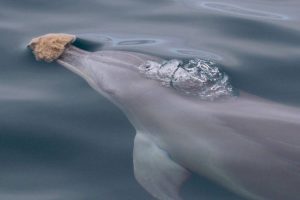
A female Indo-Pacific bottlenose dolphin in Shark Bay uses a sponge to protect her face while hunting on the seafloor. (Credit: Dolphin Innovation Project)
Another behavior in the same dolphin population that has been documented more recently is the so-called “shelling” or “conching”. It is a foraging behavior, too, in which dolphins use an empty shell to catch and eat. Conching takes some skill and practice, and only a minority of dolphins in this population have mastered it. Rather than learning this behavior from their mothers (vertical transmission), the dolphins are learning this behavior from their peers (horizontal transmission).
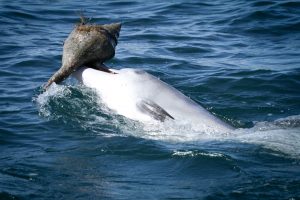
An Indo-Pacific bottlenose dolphin in Shark Bay, Australia, catching a fish in a gastropod shell. This foraging behavior is called “shelling” or “conching” (Credit: Sonja Wild/Dolphin Innovation Project)
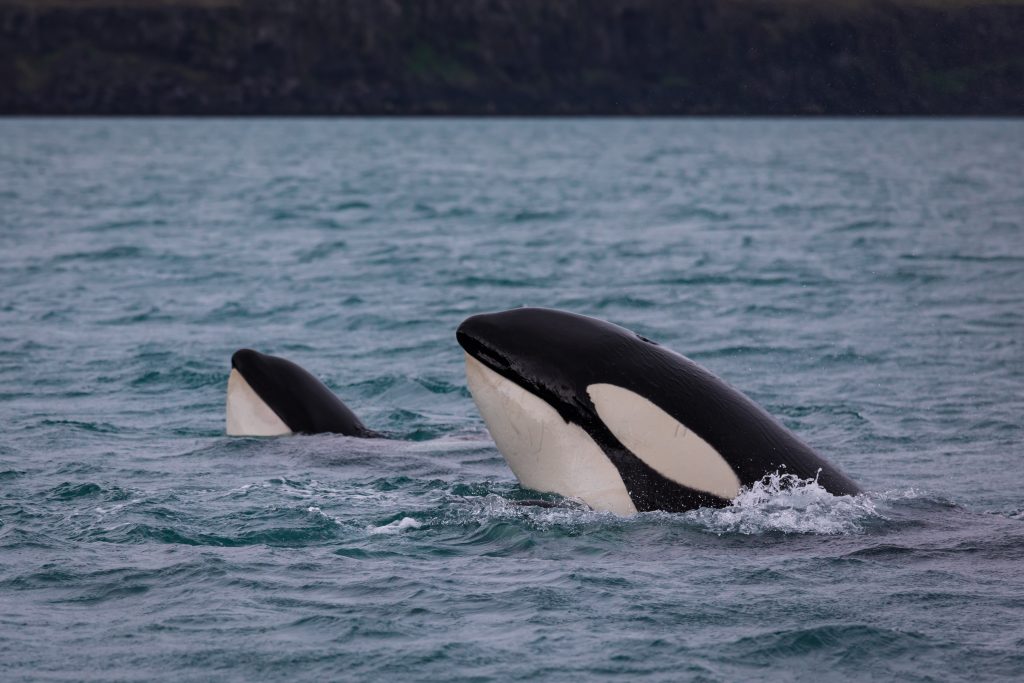
Another example is killer whales, also called Orcas. Currently, scientists distinguish between at least 10 different ecotypes among the global killer whale population. That means that even though as of now all Orcas worldwide are still considered a single species, they are far from all being or behaving the same. What is particularly remarkable, is that even populations of killer whales that live in the same area do have different cultural traditions and dialects. Scientists can distinguish different ecotypes just by listening to their vocalizations. And killer whales are fussy eaters, too: They only feed on the type of food, that their mothers and other family members have taught them to.
Also, Orcas of different ecotypes will not breed with one another. They will only mate with Orcas belonging to their own ecotype. Since there has been no gene flow for 150,000–700,000 years, different ecotypes differ genetically from each other and also in their morphology, i.e. the way they look. Below you see shows a male and female of each of the 10 ecotypes that have been recognized so far. They reach different sizes as adults and both the saddle patches behind the dorsal fin and especially the shape of the white eye patches varies between ecotypes. Scientists advocate the recognition of at least some ecotypes as subspecies or even species in the future – soon there might be officially more than one species of Orca out there!
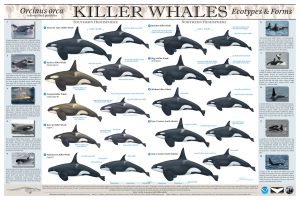
Here in the North Atlantic, two different ecotypes are recognized, called Type 1 and Type 2 (very imaginative). Below can see that Type 1 remains smaller than Type 2 with an average size of 6.6 and 8.5 m, respectively. The Orcas seen in Iceland waters are often Type 1. They are highly skilled hunters of Atlantic herring and have developed special hunting strategies to catch it. Other fish prey includes mackerel and salmon. Also, many orcas in Norway belong to
Type 1 and feed on Herring in the fjord systems. However, some type 1 killer whales also feed on seals and harbor porpoises. Type 2 killer whales, on the other hand, are mostly feeding on other marine mammals.
The humpback whale is one of the main species we see on our tours off the coast of Reykjavík. So, let’s have a look at them, too. At first sight, humpback whales do not seem as social as bottlenose dolphins or orcas. However, they, too, have feeding techniques that individuals learn from their peers, e.g. lobtail feeding. This is a slight variation of a better-known feeding technique called bubble-netting. It was hypothesized that this behavior was initiated as whales in Alaska switched from feeding on herring to sand lance. Since then, researchers were able to show that it has spread through cultural transmission. Like Australia’s bottlenose dolphins, humpback whales are learning from their peers.
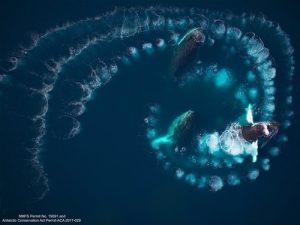
This photograph taken with a small drone in Antarctica shows several humpback whales creating a bubble net to herd krill together. Credit: National Marine Fisheries Service https://www.sealifer3.org/news/humpback-bubble-nets
Another example is the famous song of the humpback. It is an extraordinary example of vocal cultural behavior. Researchers have even detected patterns of song evolution and revolution among the populations (14). Humpbacks seem to have a tendency to learn novel songs. In the southern hemisphere, interactions between humpbacks from different breeding populations are possible on their circumpolar Antarctic feeding grounds. These interactions generate revolutions in song patterns moving from one population to the next. This means, whole populations rapidly and collectively substitute their song for a new version. In the northern hemisphere, however, populations from the North Atlantic and North Pacific are separated by continents which prevents cultural influence between populations of the two oceans. This explains the more gradual change of the songs in Northern populations in which song revolutions have rarely been documented. Here, the populations need to generate new song material themselves and cannot copy other populations.
There is no question that more research is needed to figure out how much cultural transmission in animals resembles that in humans. We are probably still only scratching the surface, but can see that cetaceans have developed complex and impressive culture.
Culture also has important implications for conservation. Without us being aware, a population might be subdivided into cultural groups, like the different ecotypes of Orcas. If conversation efforts focus on only one group, it might lead to a loss of diversity. It has also been shown how human disturbance can cause cultural changes in non-human animals.
For culture to play a bigger role in conservation, we need to create a public awareness of non-human animals having a culture in the first place. As mentioned in the introduction, to many anthropologists it probably does not make a lot of sense to call anything that non-humans do culture. If one focuses on language and symbols, that seems very reasonable. For evolutionary biologists, on the other hand, culture is an alternative information stream besides genes. From this perspective, the differences are more of degree than kind.
Accepting the presence of culture in other species than our own would go against our anthropocentric view of the world and we would perhaps finally have to say goodbye to our throne as the crown of creation. But would that be so bad?
If you made it all the way to the end, I assume you might be interested in learning a lot more about this topic. In that case, I highly recommend the book “The Cultural Lives of Whales and Dolphins” by Hal Whitehead (Dalhousie University) and Luke Rendell (University of St Andrews).
Blog by Hanna Michel, Special Tours Guide
Whale watching is like a box of chocolates – you never know what you’re going to get. Or something like that, I haven’t seen that movie in a while. But it’s true! When we set sail from the Old Harbor in Reykjavík out into the feeding grounds of the largest bay in Iceland, we often have a pretty good idea of what awaits us out there, but we can never be sure. Which types of whales (or cetaceans) are there, and what they’re doing, can vary from day to day and even from hour to hour. When going whale watching, there are several notable whale behaviors to be on the lookout for!

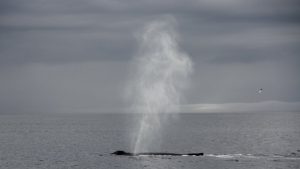
Thar, she blows! This is often the first sign of a whale that we get while searching. The blow of a whale appears from the distance as a puff of steam or geyser coming up from the water’s surface and is caused mainly by the condensation of water vapor from the whale’s lungs. In proper conditions, the blow of any cetacean species can be visible, even the tiny harbor porpoise.
The blows of different whale species vary in their shapes, which sometimes makes it possible to identify a species from far in the distance! For example, the blows of humpback whales, fin whales, and blue whales are quite tall and column-like, while minke whales’ blows are much lower and bushier. And then there are some whales with rather unusual blows – sperm whales’ blows come up at an angle, while right whales have V-shaped blows!

Why do whales spyhop?
After more than 50 million years of evolution, cetaceans are extremely well adapted to their lives underwater. But because they evolved from land mammals, this means their eyesight is still functional above water – and they can take advantage of that! Cetaceans sometimes lift their heads out of the water to get a look around, a behavior called spyhopping. This might be out of curiosity, especially if a whale-watching boat is around, or it might even be to look for something to eat, for example when orcas are hunting for seals resting on ice floes. Some whales are strong enough to keep their heads out of the water for several minutes at a time. It’s so amazing when a whale is as curious about us as we are about them!

Why do whales put their fluke up when going for a dive?
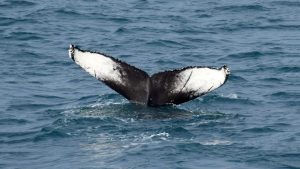
When it’s time for a baleen whale to take a deep dive, it will arch its back and point its head towards the seafloor for better leverage. Sometimes, however, a whale needs a little extra push to dive down, and so it will lift its tail (or fluke) out of the water as it goes down! The reason for this is likely related to the whale’s bulkiness – whales with thick blubber layers float very easily, and so they lift up their large and heavy flukes to weigh themselves down. The fluke of a humpback whale can stretch more than 5 meters across!
This common behavior of humpback whales is particularly useful to scientists who study them. Each humpback whale’s fluke has a unique pattern of black and white, which is a bit like our own fingerprints. By photographing the flukes, we can tell when that individual was spotted last, and by comparing photos between different areas we can also tell where else they’ve been spotted. Many of the same humpback whales return to Faxaflói Bay every year! Read more about this in our blog about Humpback whale Identification.

Why do whales breach or “jump”?
Experiencing a breaching whale is an incredible behavior well-known by whale watchers around the world. It doesn’t happen often, but when it does, it’s incredibly exciting to see one of these oceanic giants lifting their bodies out of the water and crashing down with a splash! But why do whales breach? Well, there is no simple answer as to why whales breach. In fact, there are likely several reasons, and whales can breach for different purposes each time. But here are several major theories:
Communication: When large whales breach, the impact produces sounds over a wide frequency range which can travel quite far. One study showed that humpback whales are more likely to breach are pods are separated by long distances, possibly because the wide frequencies aren’t drowned out by wind and wave noise, like vocalizations are. A breaching whale may be doing so in an attempt to attract mates or to signal to others that it is available.
Bathing: Cetaceans, especially large, slow-swimming species, may accumulate parasites such as barnacles or lice or even algae on their skin. The force of impact when these large animals breach is enough to send these unwelcome guests flying, so they may be keeping themselves clean by breaching!
Feeding: When cetaceans breach, they could be crashing down onto a school of fish or other prey to stun them and make them easier to catch and eat.
And then of course, whales may just be doing it to have fun!

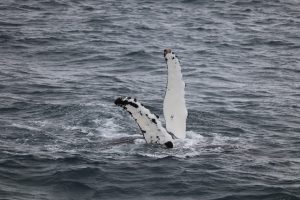
Pectoral slapping, also known as pec-slapping, is a behavior most commonly seen in humpback whales. The individual rolls onto its back or side, raises one of its flippers (or pectoral fins) out of the water, and slaps it down onto the surface. Humpback whales have the longest flippers of any whale, stretching up to 5 meters, or 1/3 of the whale’s total body length. So when humpbacks slap their fins, it can produce a loud sound and quite a splash!
The reasons for this pec-slapping behavior may be similar to breaching: to communicate, to rid themselves of parasites, or perhaps for having fun. During the mating season, female humpback whales have been known to pec-slap to indicate to males that she is available.

No matter which of these behaviors you see, sailing into Faxaflói Bay aboard our boats will provide an unforgettable wildlife adventure. We at Special Tours Wildlife Adventures offer whale watching tours every day of the year, with up to 10 departures in the summertime. For more information, or if you have further questions, then feel free to contact our ticket office at info@specialtours.is or call +354 560 8800.
Blog by
Jonathan Rempel
Instagram: @jon.rempel
Head Guide, Special Tours Wildlife Adventures