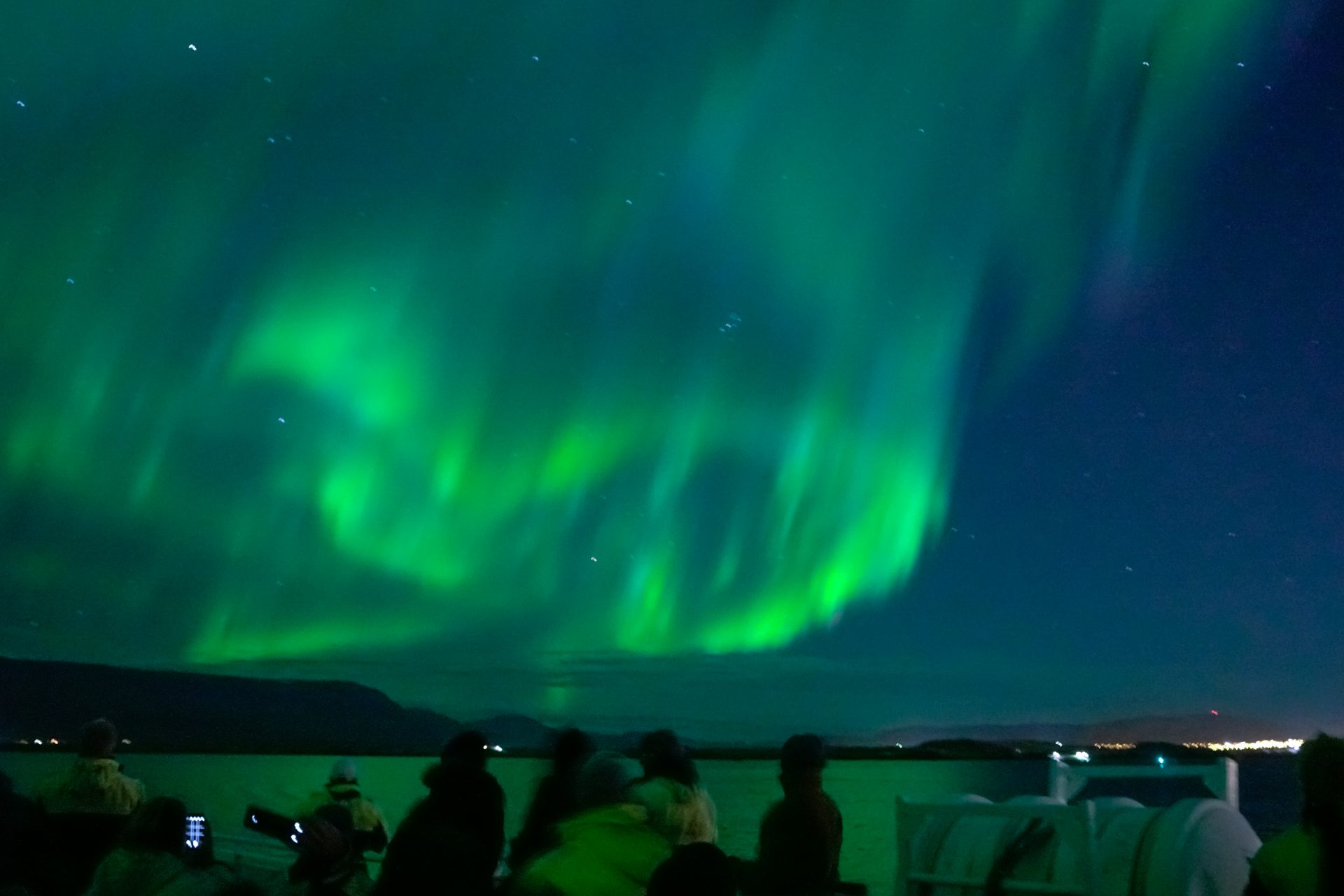
The northern lights are truly a sight to behold. These otherworldly green ribbons regularly lighting up the skies of the arctic and subarctic have inspired awe for millennia. It is, then, little wonder that they top the list of the Seven Wonders of the Natural World. Today, we roughly understand the science behind them – including what causes them, and how to maximize our chances to see them. But throughout recorded history, auroras have inspired myth and legend in creative attempts to explain their causes and effects. Some people revered the lights, while others feared them. Some saw the lights as good omens, and others as harbingers of evil and despair. Here, we explore some of these myths and legends about northern lights.

Myths and legends about northern lights

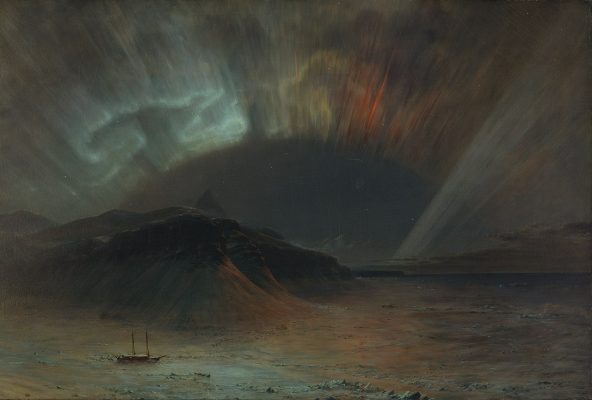
Aurora Borealis by Frederic Edwin Church, an 1865 painting

The Sámi, the indigenous people Scandinavia, are among the cultures who had a healthy distrust of the northern lights. They believed that if northern lights came too close to Earth, they could swoop down and grab unsuspecting people – and so people hid from the lights, or tried to scare them off by clapping their hands loudly. But it was also discovered that whistling would draw the lights nearer. Sámi children would dare each other to whistle at the lights, until they came nearly close enough to grab them, and then scare them away again by clapping. So next time you’re out hunting the auroras, maybe give whistling a try!

Here in Iceland, few records of northern lights myths remain. One common belief was that northern lights could ease the pain of childbirth – however, if a pregnant woman were to gaze upon the auroras, her child would be born cross-eyed! Another belief was that auroras could be used to predict the weather – if the lights were dancing and waving in the sky, it meant a storm was coming, and people had to make preparations. Alternatively, if the lights were dancing, it meant a war was occurring somewhere in the world.

The Finnish word for northern lights – revontulet – translates directly into English as “fox fires.” This comes from an old legend of a magical Arctic fox – the “firefox” – who ran continuously across the tundra. Depending on the telling of the legend, the northern lights were caused by either its radiant fur, or the sparks that rose into the sky as it swept its tail across the landscape.

Myths and legends about northern lights

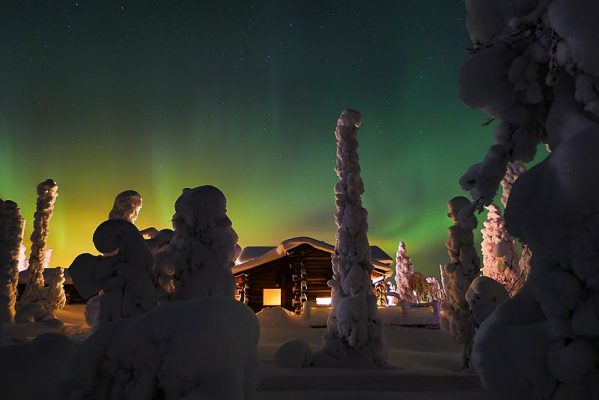
The aurora borealis lights up the sky around a cottage in Ruka, Finland

Meanwhile, Sweden was one of the places where northern lights were considered a good omen. A common belief was that the northern lights were reflections of lights off the scales of herring swimming far away in the sea – so if a fisherman saw the lights, a good catch was on the horizon.

In Denmark, legend spoke of swans who would hold competitions to see who could fly the farthest north. But swans who flew too far north might get their wings frozen. By flapping their wings, the ice crystals could be shaken loose, and reflect the sun’s light into the sky, causing the northern lights.

In Norse mythology, the northern lights were said to be reflections from the silver armour and spears of the Valkyries, the choosers of the slain. When a Viking warrior fell in battle, should he be worthy of the honour, he was escorted to Odin’s hall in Valhalla to feast with the Norse gods. The Valkyries were the female figures responsible for choosing these worthy warriors. So the night before an important battle, if a warrior looked up into the sky and witnessed the auroras, it meant the Valkyries were watching and ready to make their choices.

When watching the auroras dance on a clear night, behaving as they are breathing and have taken on a life of their own, it does not take a stretch of the imagination to see how many cultures saw them as manifestations of spirits or gods. Should you count yourself among the lucky ones to witness such a sight, then you can make your own conclusions. Come join us on one of our northern lights by boat tours – you might just witness the sight of a lifetime. (For tips on how to prepare for a northern lights hunt, click here!)

By Jonathan Rempel

Are you planning to come to Iceland and dreaming of seeing the northern lights? Then you’re probably also wondering about your chances of seeing the northern lights in Iceland. Worry not, we are here to explain.

The northern lights are an amazing natural phenomenon that has astounded humanity throughout recorded history. Only the slightest minority of people had ever heard about these celestial lights, much less seen them with their own eyes. But over the past 1-2 decades, thanks to the internet and social media, photos of the lights – or aurora borealis, as they were nicknamed by Galileo – have spread like wildfire and ignited the burning desire to venture into tiny corners of the world where the lights can be seen. One of which, of course, is Iceland.


chances of seeing the northern lights in Iceland


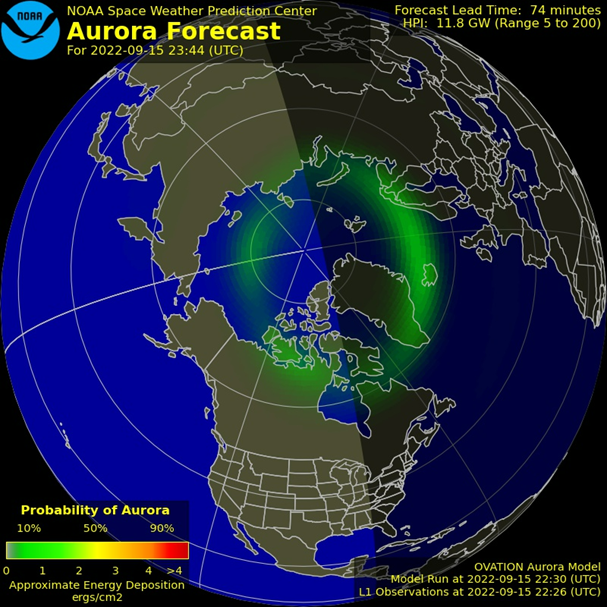
Northern lights are the result of the charged particles in solar wind – protons, electrons, and alpha particles – with gas molecules hundreds of kilometers up in our atmosphere. The excitement of those gas molecules causes them to produce light, which we perceive as auroras. Generally, auroras only occur within a narrow band at high latitudes, because the Earth’s magnetic field deflects the majority of the solar wind towards the north and south poles.

While it is occasionally possible for this “auroral oval” to widen, such as during strong solar storms where a significantly higher amount of solar wind is sent our way, generally one must venture far north to have a chance at witnessing the northern lights – and Iceland usually lies right within the brightest part of that auroral oval. Just check out this Aurora Forecast, with a screenshot taken right as I was writing this article:


chances of seeing the northern lights in Iceland


That means that by visiting Iceland, you are already in one of the best places in the world to spot the Northern Lights. Well done! But that isn’t always quite enough, of course. The weather has to cooperate as well. Now, you may have already heard about Iceland’s famously fickle weather – well, that applies even more so to weather in the winter, which is the only time of year the auroras are visible here. Sometimes the weather doesn’t cooperate – which means aurora hunting requires patience, and a few tries. But overall, your chances of seeing the auroras here are good. Just don’t get lazy – during your trip to Iceland, be sure to try every single night, no matter how tired you are. And who knows? What you see might just be the experience of a lifetime.

Special Tours Wildlife Adventures was the first company in the world to offer northern lights tours by boat, an incredible experience that goes far beyond what any bus company can offer. And we are well aware of the weather – if your tour is cancelled due to cloudy conditions, we provide a backup plan to give you an enjoyable way to spend your evening, plus the option to rebook for the next evening.

Keep your eyes on the skies, and happy hunting!

By Jonathan Rempel, Head Guide

Get inspired, feel the connection!

In my opinion the will to protect anything – may it be a building, a landmark, an ecosystem or as in our case cetacean species, starts with inspiration and connection. We are much more likely to care about something that we feel connected or even emotionally attached to. One of the many ways to do so is by watching documentaries and learning about how awesome these whales and dolphins really are. The wonder of a „WOW!“ can really change lives. There is huge growing interest and a market for nature documentaries that reflect how much more we care and are interested in these beautiful places and species. This article lists several things that you can do to contribute to whale conservation.

Whale and man - Whale conservation

Join a whale watching tour

For the same reason, you might consider joining a whale watching tour. Depending on how it is done, it can be a sustainable way of environmental education and seeing cetaceans in a non-harmful way. An encounter with a cetacean in its natural habitat is one of the most awe-inspiring sights in nature. If a tour is done well, follows best practices and has an educational element it has the potential to foster an appreciation for wildlife in its natural environment and contribute to whale conservation. Moreover it raises awareness of whale and dolphin conservation needs.  You might be so inspired that you participate in environmental and conservation actions. That would be awesome!

It also benefits the local economy. The latest report of the International Fund for Animal Welfare from 2008 showed that 13 million people participated in whale watching in 119 countries and territories, generating a total expenditure of $2.1 billion. Furthermore, an estimated 3,300 operators offered whale watching trips around the world. The operators employed an estimated 13,200 people. With the exception of the COVID Pandemic years, the industry and tourist sectors have continued to grow.

Iceland has become the biggest whale watching destination in Europe. Whale watching started quite recently in 1991. 24 whale species have been seen around Iceland. With an 18.3% market share of the tourism industry, whale-watching is steadily becoming popular in Iceland. 20% of all visitors to Iceland go whale watching, that means about 364,000 people in 2019.
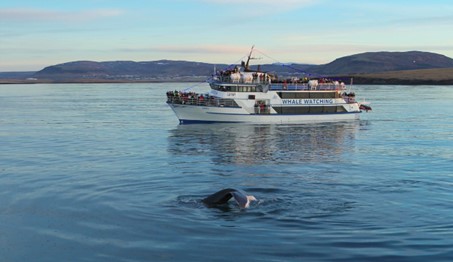
Whale watching boat and whale - Whale conservation


Start with the person in the mirror! Lifestyle changes

I‘m sorry to say this, but it could be considered quite hypocritical to go on the streets and demand more strict regulations for the protection of cetacean species (good on you for doing so though!) and at the same time continue to be part of their demise in a lot of different indirect ways. If your words and actions (or way of living) go hand in hand, you will be a believable role model for change and protection. Let’s look at a few of the things that you you can “easily“ implement in your daily life.

Plastic pollution

Plastic is a major hazard for many seabirds and all the species that live in the sea. Mass production only started in 1950s, but has reached a production of 8.3 billion metric tons. 6.3 billion metric tons have become plastic waste. If present trends continue, by 2050, there will be 12 billion metric tons of plastic in landfills. That amount is 35,000 times as heavy as the Empire State Building. Plastic seems to smell like food for a lot of species at sea, or- to be more precise, like algae that is breaking down naturally. This algae is what krill, a crustacean species that acts as the main prey for many species, is mainly feeding on. So animals have learned to associate the smell of large quantities of algae breaking down with the abundance of krill. Plastic debris provide the perfect platform for algae to thrive. But unfortunately instead of krill the seabirds only find the debris that they mistake for food. That is why they are eating so much of it with devastating effects on their health. With a full tummy, but without any nutrition, they are slowly starving without noticing. Not only that, but plastic also has toxic effects and entangles many animals. There are a couple of things that you can do in your everyday life to reduce the amount of plastics in the water. Every single bag makes a difference!

  1. Reduce your use of single-use plastics including water bottles. It´s time to buy a reusable one (also for your coffee) and have them with you as much as you can.
  2. Recycle properly: Just 9% of plastic is recycled worldwide today. But proper recycling is very important as it helps to keep plastics out of the ocean. Moreover it also reduces the amount of “new” plastic in circulation.
  3. Be a conscientious consumer when you‘re shopping. Choose natural fibres for your clothing, because microplastics in your synthetics get washed out and will end up in the waterways. Clothes made of cotton, wool and other natural fibers are preferable. Or/ and buy used items whenever possible. When you go shopping, you can also be packaging smart. What I mean by that is: you could rather buy the product with less packaging than another product of the same quality and similar price with a lot of unnecessary plastic packaging. The amount of plastic packaging could become a new criteria for the things you buy.
  4. Spread the Word: Stay informed on the plastic issue and help make others aware of the problem. Tell your friends and family about how they can be part of the solution and avoid unnecessary plastic.

Bird on a polluted beach - Whale conservation


Fish eating habits

Please be aware of your fish consumption. Eating fish means supporting the fishing industry. And you really don‘t want to do that if you care about whales and dolphins (and fish). Because entanglement in fishing gear is now the leading threat for whales and dolphins around the globe. It is estimated to cause at least 300,000 deaths per year. This by-catch has led to the almost certain demise of the world’s smallest porpoise, the vaquita in the Gulf of California. But even much larger species, like the false killer whale are caught and killed in nets all around the globe all year long. And if they don‘t die directly in the nets, some swim for months with gear wrapped around their bodies, entrapping them and sometimes sawing into their flesh until they die from infections or starvation. Or they can‘t make it to the surface anymore and drown. Those who escape can be left with painful injuries.
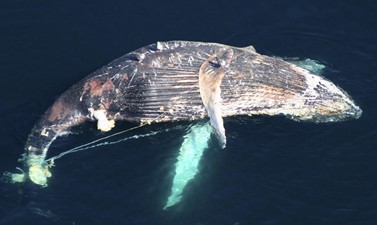
Entangled whale - Whale conservation

And please don‘t think that farmed seafood/fish is any better. Lots of pollutants, medicine being fed and spread to and by the fish, lots of inbreeding with natural fish stocks that weakens the genetic pool of the wild strains and feeding farmed fish with fish meal from wild fish are just a few of the big issues regarding this topic. There is a good overview of these issues by the WWF here:

There is also a red list published and updated by Greenpeace with fish species that you should try to avoid eating. Have a look at the guide per country by WWF below.

There are many lists by different NGO‘s about companies that do a better or worse job at supporting sustainable fishing. To find fish with the lowest impact, look out for pole and line-caught or one-by-one fishing.  Find examples here:

By eating less and being more mindful of the fish that you buy you can make a difference, because it sends a message to the fishing and retail industry to make stronger efforts to protect whales and dolphins. Some people are making a conscious decision to stop eating fish altogether. This is a personal choice, but it can be a powerful one.


CO2 Emissions reduction

There is a million things you could do to when it comes to your carbon footprint and thereby your influence on climate change that is impacting the smallest organisms of the ocean to the largest cetaceans. Traditional feeding grounds might shift or deplete completely because of warmer waters that some cold water fish can‘t inhibit. Opening ice means less sheltered places for species like the narwhal that their predators – the orca couldn‘t reach before. Cut the car: bikes, buses, skateboards, feet – use them! It´s good for the environment, and the more active you are yourself, also for your health.

For more information, check here:

europa.eu/youth/get-involved/sustainable-development/how-reduce-my-carbon-footprint_en

And for a full guide, refer to here:

www.nytimes.com/guides/year-of-living-better/how-to-reduce-your-carbon-footprint

A good way of general thinking is to make „Reuse, Recycle, Repair“ your official motto and guideline for all kinds of consumer choices and everyday decisions.
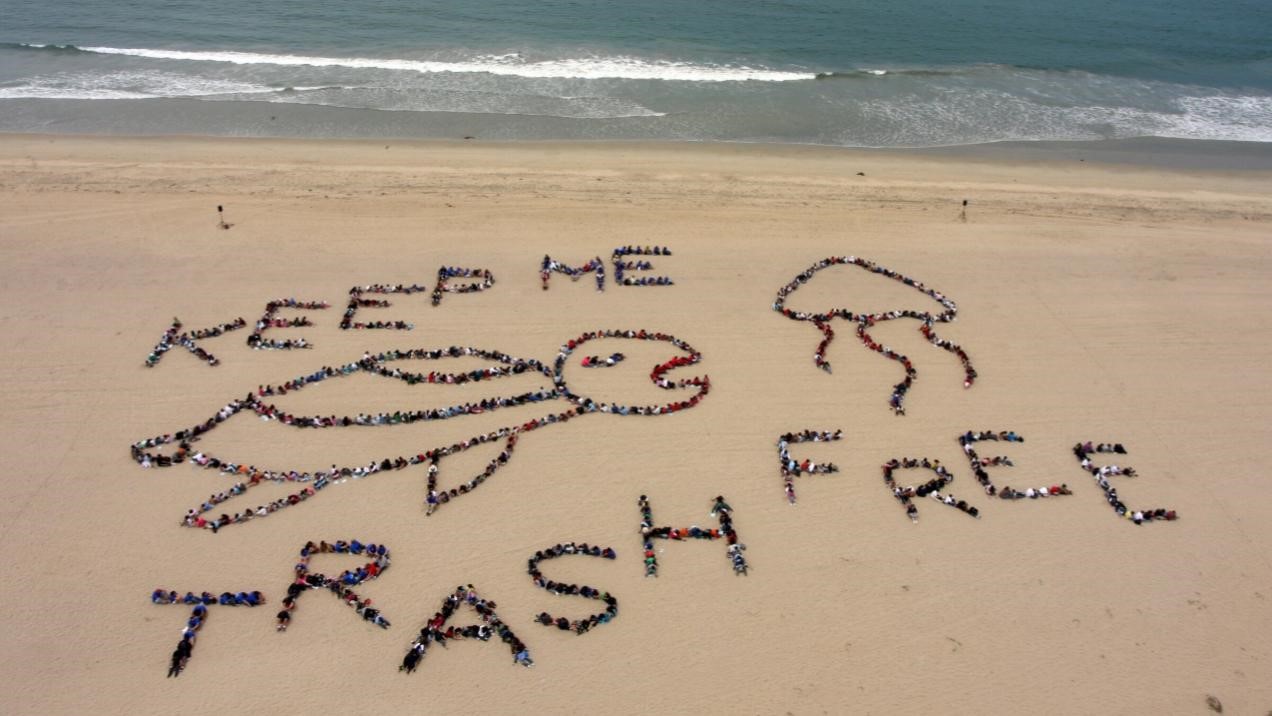
Keep the ocean trash free - Whale conservation


Get active!

Volunteering is a great opportunity to get close to your beloved whales and dolphins, while at the same time get hands on in whale conservation work. You can contribute to the conservation efforts of these magnificent creatures. You can also join activities such as identification projects to help understand their migration and distribution. There are countless providers and offers and you can easily find them online.

You can find programs here, but there are many other websites too:

Wherever you might be living, join some local clean ups if you can. There is likely some water body close to you and so any material will be transported into the ocean sooner or later. You can prevent that by helping your community to stay clean. This is one of the most direct and rewarding ways to fight (ocean) plastic pollution. You can also  go to a waterway and collect waste on your own or with friends or family. Even make a competition out of it, with the one collecting most rubbish winning a prize, if that´s something your group of people would enjoy. Just be creative about it and make it fun.

Cleaning up beaches - Whale conservation


Join Citizen Science Projects

Science often sounds boring or dry, but this is actually fun. You get to take all the beautiful shots of the animals – especially the flukes of humpbacks and dorsal fins of orcas and upload them, so that scientists can identify them and thereby deduce their migration routes and different kinds of behaviour that might then eventually lead to management strategies like Marine Mammal Protected Areas or legislation regarding reduced speed among others. Check these pages among others:

Donate

Lots of research is needed to understand these beautiful cetaceans. This understanding will make it easier to make good management decisions and lead to science based best practices for responsible whale watching among other activities (fishing). You could help organisations keeping their amazing work up by supporting them financially. There are also lots of programs out there to adopt whales and dolphins. It´s a wonderful way to support an individual that you are particularly interested in and observe how its doing.

You can find examples here:


Visit whale-friendly restaurants while in Iceland and help whale conservation

People want to try whale meat for different reasons during their stay in Iceland. It might be sheer curiosity for the taste or because it is marketed as a traditional Icelandic dish. However, this is a marketing lie: in a 2018 survey only 2% of Icelanders reported that they eat whale meat regularly, which means six times or more per year. 84% said they had never eaten it!

Tourists are now creating the highest demand for whale meat in Iceland. The meat came from minke whales- hunted right here in Faxafloi Bay. Since the COVID pandemic, the company has stopped its activity. However, one company remains that continued the hunt of the vulnerable fin whales in 2022 again.

But things are changing: between 2009 and 2017, the number of tourists who said they tried whale meat dropped by 70%. Now less than 10% of the restaurants in Reykjavik offer whale meat, while more than half signed up to be “whale friendly”. The pressure is increasing. Please only visit these ones, if you want to encourage change. You can often find them with the help of the logo: „Meet us, don‘t eat us“ as shown below.

You can also sign a petition to end whaling in Iceland here:Meet us, don't eat us! Whale conservation

Some good news at the end: the Fisheries minister said that whaling no longer seems to be a profitable activity as demand dwindles. Therefore it seems likely that whaling might be stopped in 2024, when current licenses will expire. Hurray!


See things in perspective

Things can look very dire in some of the documentaries and the news you can find online. Big issues like by-catch, whaling, plastic and noise pollution, entanglements and climate change: the list is endless of what is going wrong and how much cetacean species are suffering. I’m certainly not here to tell you that it´s all not so bad. What I want to point out to you is that there is another side of the coin: Things are actually getting better in many ways. Just some examples: following the whaling moratorium, the population of Western gray whales increased from 115 individuals in 2004 to 174 in 2015. The western south Atlantic humpback population, which numbered fewer than 1,000 for nearly 40 years, has recovered to close to 25,000. Also in the north Atlantic, including Icelandic waters, populations have recovered to perhaps pre-whaling levels and number over 12,000 animals. The population of bowhead whales in the Bering-Chukchi-Beaufort seas has been increasing annually at over 3% since 1978 and may be approaching pre-exploitation levels. In 2011 its abundance was nearly 17,000 animals. The majestic blue whale is recovering throughout its range.

Many populations and species are slowly recovering (while others are continuing to decrease). Our perception of cetaceans has changed and we start to care more about them. Instead of hunting and killing them, we often choose to join whale watching tours in order to see them. Around 100 million people from high income countries have participated in whale watching at some time, a figure that is increasing by 10 million each year.

As an individual I often feel overwhelmed about how little influence I really have on all the pressures and systematic issues there are that are affecting cetaceans and other animals and their ecosystems around the globe. I try to take a minimalist, but optimistic approach. Everything I do or change out of love and compassion for another species is already a tiny step that wouldn’t have been made, if I didn’t care. And as awareness and respect are rising in many individuals we can really transform our lifestyles and make a difference within our lifetime. The beautiful humpback whale is already projected to make a full recovery to pre-whaling numbers by 2050 .


Written by Daniel Blankenheim
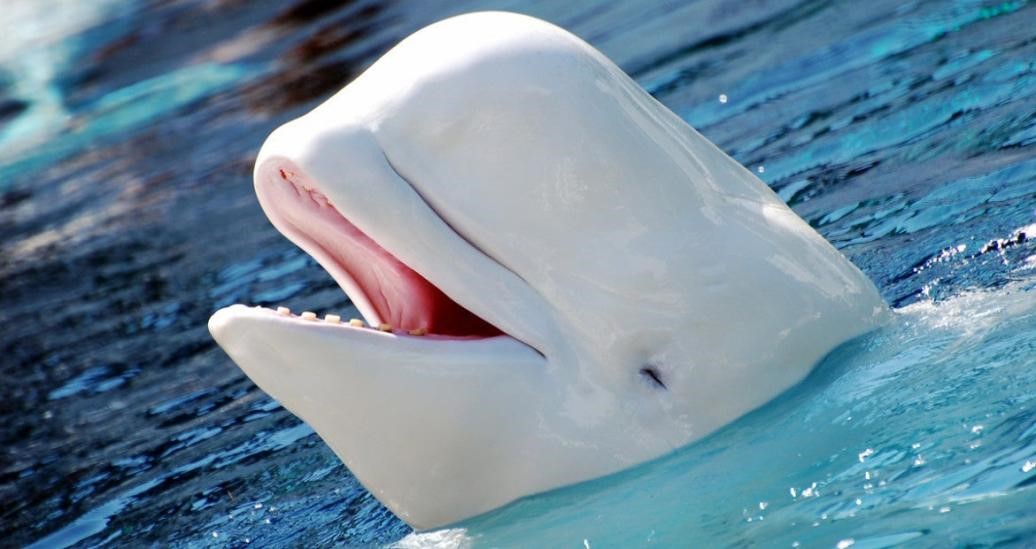
Beluga whale - whale conservation

Resources

Plastic pollution

  1. https://www.oceanicsociety.org/resources/7-ways-to-reduce-ocean-plastic-pollution-today/
  2. https://www.nationalgeographic.com/science/article/plastic-produced-recycling-waste-ocean-trash-debris-environment
  3. https://www.nationalgeographic.com/science/article/animals-eat-ocean-plastic-because-of-smell-dms-algae-seabirds-fish
  4. https://news.climate.columbia.edu/2018/05/11/can-fight-plastic-pollution/

Whaling

  1. https://www.paciorg/blog/ways-to-save-the-whales/
  2. https://www.ifaw.org/international/journal/saving-whales-iceland-ifaw-approach-jalou-langeree
  3. https://www.ifaw.is/
  4. https://www.ifaw.is/history/
  5. https://uk.whales.org/our-4-goals/stop-whaling/whaling-in-iceland/
  6. https://en.wikipedia.org/wiki/Whaling_in_Iceland
  7. https://grapevine.is/news/2022/03/23/company-aims-to-hunt-whales-this-summer/

Whale Watching

  1. https://icewhale.is/

Whale recovery

  1. https://www.awe.gov.au/sites/default/files/documents/cetacean-snapshot.pdf

Fish Eating

  1. https://uk.whales.org/our-4-goals/prevent-deaths-in-nets/

Lifestyle changes

  1. https://europa.eu/youth/get-involved/sustainable-development/how-reduce-my-carbon-footprint_en
Even in the oldest written literature of Iceland, the sagas of Icelanders, dating back to events in the 9th, 10th and 11th century, there are almost no accounts of whaling in Iceland, except for some feuds between families about whale carcasses on the beach. Historically it were foreign countries that starting hunting whales commercially here (Basques, Norway, Danish, Dutch) in the 17th century. In the 18th century, it was mostly Frensh and US Whalers that hunted right whales further North. In 1883, the Icelandic government granted permission for Norway to build whale hunting stations in Iceland. By the early 1900s whale populations were depleted and Norwegian companies moved to the Arctic. Between 1895 and 1905 a total of 10,475 whales had been killed, mostly by Norwegian operators. It seems that Icelanders themselves never participated in the European commercial whaling of the seventeenth to twentieth centuries.

However, In 1948 an Icelandic company, Hvalur h/f, established a whale hunting station in Hvalfjordur (close to Reykjavik) and by 1975 killed on average 250 fin whales, 65 sei whales and 78 sperm whales each year, in addition to some blue and humpback whales. Most of the whale meat processed was exported to the UK, whilst meal was used as domestic animal feed. Until the end of the 20th Century Icelandic operations resulted in approximately 17,000 whales being killed within Icelandic waters. A whaling moratorium came into full effect in the year 1986 (that Iceland never formally accepted). From 1990 to 2003 no whale hunting took place in Icelandic waters. Whaling resumed in Iceland in 2003 after a 13-year hiatus. It was mostly Fin and Minke whales from there on.

Whaling in Iceland

Recent years

In Iceland’s last full season in 2018, 146 fin whales and six minke whales were killed. Fin whales are listed as endangered species and not even Norway or Japan hunt them. Fin whale meat products are exclusively exported to Japan as there is no domestic demand. But  because Japan returned to commercial whaling in 2019 after withdrawing from the International Whaling Commission (IWC), even this demand for Icelandic whale meat has decreased dramatically.

Whaling was temporarily paused in Iceland between 2019 and 2021 as coronavirus restrictions, competition from subsidized Japanese whaling, and increasing domestic whale watching tourism have hampered the industry. There were two companies until 2020 when one of them stopped. This was the one hunting minke whales. Hvalur hf remains the only company that continues its whaling practices for the endangered Fin whales and is planning to continue operations in 2022. I saw them going out already. A weird feeling when you are on a whale watching boat and see a whaling boat headed out into the bay. Hvalur is operating outside of the Old Harbour, right here, where our whale watching tours start. Their ships are marked with an „H“ (Hvalur 8 and Hvalur 9).

Whaling in Iceland

Curious minke whale

Why Whaling?

Tourists visiting Iceland remain the largest consumers of (Icelandic) minke whale meat. A 2009 Gallup survey for IFAW (International Fund for Animal Welfare) found that 40% of tourists admitted to sampling whale meat: by 2015, this figure had fallen to 18% and by 2017, had dropped still further to 11.4%. Given that over 2.3 million tourists visited Iceland in 2018 and a further 2 million in 2019, it is incredibly important to reach all of you, who come to Iceland, with the message that whale meat is neither traditional nor a popular dish locally. In fact, in a 2018 Gallup poll for IFAW only 2% say that it is a regular on their plates, which means six times or more per year. 84% said they had never eaten it! Domestic demand by tourists is now covered by imports from Norway.

It is an undeniable fact that every whale killed is one fewer to be potentially enjoyed by whale watchers on tours, especially considering that all minke whales killed were previously harpooned close to the whale watching area in Faxaflói Bay. It must also have affected their behavior, as they still seem to be more shy and elusive than other cetacean species around the boats. Of course, we here at Special Tours, as a sustainable whale watching company have confronted the whaling companies and often spoke out publicly against the hunts.

What you can do about it

Some good news at the end: the Fisheries minister said that whaling no longer seems to be a profitable activity as demand dwindles. Therefore it seems likely that whaling might be stopped in 2024, when current licenses will expire. Hurray!

Are you visiting Iceland and hoping to see some amazing sea mammals: whales, dolphins or porpoises? Then you certainly find yourself visiting the right country, off the coast of Iceland one can find as many as 23 different cetacean species! But some of these are seen more often than others and not all of them are here year-round. You might be wondering, “what’s the best time to see whales in Iceland?” This blog is here to help you find out when to expect which species and where you can find them!  

The Best Time to See Whales in Iceland

Different seasons in Reykjavik

In Reykjavik you can go whale watching year-round. In winter the weather is more unstable, so the chances of cancellation due to rough sea are a bit higher than in summer. But in exchange there are not as many people on board, so you will get an extra nice and relaxed atmosphere on board. As to your chances to see whales, not all species are equally abundant in Iceland year-round. Baleen whales are usually migratory, and most of them will leave Icelandic waters, as they go to warmer waters to breed and give birth. Even though most humpback whales and minke whales leave during winter, some stay behind and are still occasionally seen in the bay of Faxafloí. For example in the winter of 2019, January was an extraordinary month, humpback whales were seen on 90% of all tours going out with Special Tours! So even though on average the chances to see humpback whales and minke whales are smaller in winter, there is still a chance of finding them. The toothed whale species commonly found in the bay of Faxafloí, harbor porpoises and white-beaked dolphins, are non-migratory and the chances of spotting them do not depend much on the season.

The Best Time to See Whales in Iceland

Different species around Iceland

Above, the four main species in Faxafloí were mentioned, but there have also been sightings of other whale species in the bay of Faxafloí, like killer whales, sei whales, fin whales, northern bottlenose whales, long-finned pilot whales and even a blue whale. These whale species do enter the bay from time to time, but it is extremely uncommon to see them here and one needs to be rather lucky! However in the past week, killer whales were spotted on two different days, that is amazing!

But if you want to see a killer whale, Olafsvík is the place to be. Killer whales are there in winter feeding on herring, although the best time to see them is between March and June. In Olafsvík you can also spot sperm whales in spring and early summer.

The three largest whales on earth: the blue whale, fin whale and sei whale are all baleen whales and therefore your chances to spot them are highest in summer. However, it is very hard to see fin whales and sei whales everywhere around Iceland. For a blue whale your best bet is in Húsavík, but even there you need to be quite lucky. The toothed whales, narwhals and belugas, are rarely spotted around Iceland. The solution to see a beluga, would be to go to a sanctuary in the Westman islands.

Some species we almost never see, for example the beaked whales. Because they are very deep diving whales they do not spend a lot of time on the surface. It makes it basically impossible to see them and that is also why there is so little known about them. Another very rare species is the northern right whale. This species was last seen in 2018 in the bay of Faxafloí, that was unbelievable! The northern right whale was the right whale to hunt and therefore the numbers are so far down that nowadays it is among the most endangered species worldwide. Therefore you have to be incredibly lucky to meet this whale, but apparently it is not impossible to meet one in the Faxafloí bay.

The Best Time to See Whales in Iceland

Time of the day

One might wonder if there is a difference between morning, afternoon and evening tours. Well, whales don´t have a day-night rhythm like we humans do and therefore the time does not influence your chances to see them. Instead, it is the weather conditions that are relevant when you go whale watching. Whales are of course not bothered by rain, wind or sun. But for our human eyes, it is much harder to see them from far away when it is rainy or when the waves are high due to strong winds. Sun can be nice, but its reflection on the water could blind you. So arguably, the most perfect conditions are a flat sea and a cloudy sky. On average the weather tends to be slightly better in the mornings than later on the day, but this is very variable and definitely not always the case. The best solution would be to check the forecast, but even then, that is no guarantee since the Icelandic weather forecast seems to be surprisingly inaccurate.

All in all, if you want to see breaching, tail-slapping, pec-slapping, spy-hopping or fluking humpback whales? Or maybe you are coming for jumping, bow-riding and playful white-beaked dolphins? Or do you hope to spot the beautiful arching backs of minke whales? Or maybe you always wanted to see the smallest cetacean of Iceland: the harbor porpoise? Well, if this is the case, Special Tours in Reykjavik is a perfect choice for you. There you can find the harbor porpoises and white-beaked dolphins year-round. Throughout the year there is always a chance of finding humpback whales and minke whales, although your best chances to see these two are from April to September. We hope to see you soon in the old harbor of Reykjavik, where we can take you out onto the bay of Faxafloí to show you some of those incredible ocean mammals!

The Best Time to See Whales in Iceland

Blog by Iris

Whale Watching Midnight Sun Tour

The 21st of June marks the summer solstice in the northern hemisphere. On this day, the sunset is at midnight and it raises again less than 3 hours later, the longest day of the year. The months around it also have almost 24 hours of daylight: from mid-may to mid-august is virtually never dark! We don´t get to see the famous aurora borealis by this time of the year but we are able to do something much fun: seeing whales on the Whale Watching Midnight Sun Tour!
These tours start on the 15th of June and it goes only to the end of July so you can´t miss this chance! The trip lasts for 2 to 2,5 hours (from 9 to 11 pm) and it’s the best time to see a beautiful twilight if you want to skip a few hours of sleep. And you must be wondering if the whales aren´t sleeping this time of the day too!


Whale Watching Midnight Sun

In most mammals, the pineal gland is stimulated by brightness levels, so in the dark, it produces melatonin, the hormone that makes us sleepy and tells us the time to go to bed. However, whales are thought to lack the pineal gland or it is even non-functional in several species. In fact, it is known that whales and dolphins do sleep: they need to rest but they can not forget to breathe, which made them evolve a superpower! They will shut down half of the brain time by time in order to be aware of when they need to reoxygenate their bodies. But, as most part of them can´t stay any longer than 30 minutes under the water, they will do it several times during the whole day, and not only during the night. 

Whale Watching Midnight Sun

Another point that works in our favor, is that humpbacks and minkes, are especially here in Iceland to feed. They are migratory animals that have winter-breeding and summer-feeding grounds, sometimes separated by miles away from each other! Especially in the case of the humpbacks, they will travel to the warmer water for more than 15 thousand kilometers without feeding at all, fasting for over 6 months of the year. So here, they will be constantly looking for food, small fish just like capelin and also krill, and these ones, baby, they never sleep! The whales will be constantly looking for food and this intensive hunting will make them eat (in the case of the humpbacks) up to a ton of food each day in order to gain a big fat layer called blubber, which will be used during reproduction and lactation.

Whale Watching Midnight Sun

So if you are afraid of going to see whales sleeping during this tour (although I think this would be also very cool!) don´t worry! You gonna join a very chilled tour, usually more private, with the fewer “night owls” that don´t get tired at all or perhaps have too functional pineal glands to sleep well on these bright Icelandic nights! You´re gonna get the most beautiful scenery of the day, with a wonderful sunset light for your pictures, and records on your memory for a lifetime! So if you like to have a different experience or if you are just having some trouble sleeping in this special and unique place in the world you chose for your holidays, we and the whales are going to be waiting for you to have the experience you will never forget! I will see you later!!

– Dominique Gallo

When you’re out at sea on a whale watching tour, the best thing to do is to always be on the lookout for whales and birds – the more eyes we have around the boat, the better our chances of spotting something!  

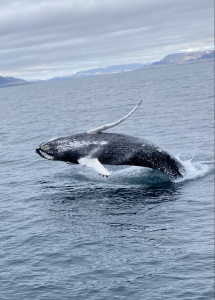
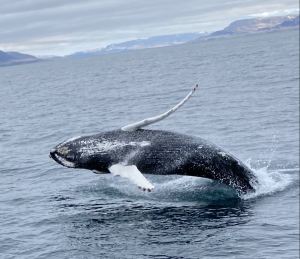
Of course, it helps to know what you’re looking for. Whales and dolphins are marine mammals, so although they live their whole lives in the sea, they do have to come up for air. When they are at the surface is when we have a chance of seeing them: keep an eye out for the back and dorsal fin cutting through the water. If you’re lucky, you may see a breach – this is when cetaceans throw their whole bodies out of the water, which makes them difficult to miss!  

whales and birds

A humpback whale breaching. Photo from Special Tours. 

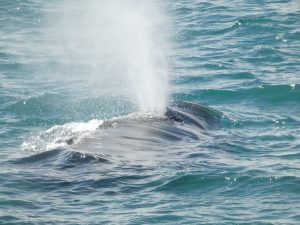
But remember, it’s not just the cetaceans themselves you should keep an eye out for. There are other important cues that can help when searching for whales at sea. The first of these is the blow – the puff of air as a whale exhales after coming back to the surface to breathe. This is especially important for larger whales, as their blow may be seen from several kilometers away! 

Seabirds are a particularly important cue for us – especially if they are feeding. Seabirds are often easier to spot as they are mostly airborne, while cetaceans are almost always in the water. This makes cetaceans much harder to spot, as they may either be completely submerged, or obscured by poor weather conditions such as waves and swell. 

Certain interactions between seabirds and cetaceans are well known, both anecdotally and in research carried out by biologists. Cetaceans and seabirds can have a very similar diet, and they are often seen feeding in the same area on the same prey. It is thought that cetaceans make prey easier to catch for seabirds by forcing it closer to the surface, within diving depth, or by herding it into large, dense aggregations. However, it is also possible that feeding seabirds could alert nearby cetaceans to a prey patch, or that they can take advantage of the hunting behaviour of seabirds. 

In this blog post, we will introduce to you some of the species of seabirds you might spot on your whale watching tour, and which cetaceans they might be hanging out with. 

Auks 

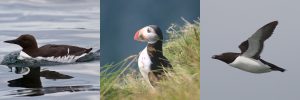
This family of birds contains puffins, guillemots, and razorbills. Auks are amazing at swimming, but not so great at flying! They can dive to considerable depths while hunting – common guillemots, for example, have been recorded going as deep as 180m. 

whales and birds

The top three auks in Iceland: common guillemot, Atlantic puffin, and razorbill. Common guillemot and razorbill from Natural England. 

About 60% of all the Atlantic puffins in the world breed in Iceland, so they are very common here in summertime. They make a great subject for photographers, with their brightly coloured beak and legs. 

If you see auks, keep an eye out for: 

Gannets 

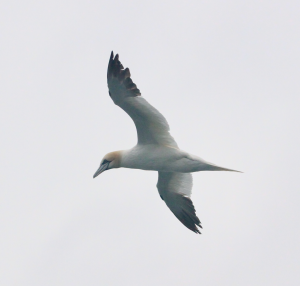
Few seabirds are as easy to identify as the gannet. They have a white body, yellowish head, and black wingtips, and are larger than most gulls. However, the most distinctive thing about them by far is how they hunt: by folding their wings and plunging into the water from a height, snatching fish at high speeds.

whales and birds 

A gannet searching for its prey. 

Research into the hunting behaviour of gannets off the coast of South Africa found that they seem to spend more searching for dolphins or other gannets than they spend looking for their prey itself. Once one gannet finds a patch of food, others quickly join the feeding frenzy – with so many gannets diving into the water, these feeding aggregations are visible from quite some distance. 

If you see gannets, keep an eye out for: 

Gannets are known to feed alongside almost every species of cetacean in the North Atlantic, but interactions are most commonly reported with these two species. 

Shearwaters 

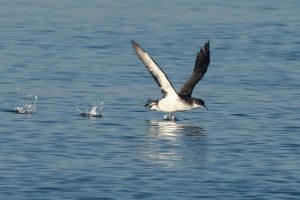
Manx Shearwaters are a very small species of seabird. Their main breeding colony is in Vestmannaeyjar and they can be seen all along the southwest coast of Iceland. There are two other species of shearwater which could be spotted in Iceland: the great shearwater and the sooty shearwater, both of which breed in the southern hemisphere and migrate to the northern hemisphere for the boreal summer. 

whales and birds

A Manx shearwater taking off from the sea surface. Photo from Electronic collection of Georgia birds. 

Manx shearwaters often sit in large groups on the water’s surface – a behaviour called rafting. Some rafts can be as large as several thousand birds! 

If you see shearwaters, keep an eye out for: 

Kittiwakes 

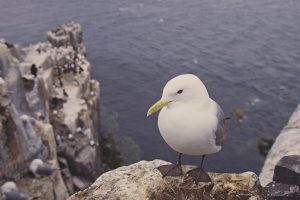
Kittiwakes are small gulls – they look similar to other types of gull, such as the herring and common gulls, but can be distinguished by their black legs and feet. They breed in colonies on cliffs which can be heard before they are seen! Kittiwakes are very noisy birds. In fact, they are named after the noise they make: a screech that sounds as if they are saying ‘kittiwake’. 

whales and birds

A kittiwake on the cliff of its breeding colony. Photo from Natural England. 

If you see kittiwakes, keep an eye out for: 

Other species 

whales and birds

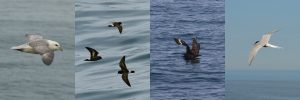
Some other birds to keep an eye out for: northern fulmar, European storm petrel, great skua, and Arctic tern. Storm petrels from The Crossley ID Guide Eastern Birds, Arctic tern from Eric Sonstroem. 


By Eilidh 

Photos by the author unless otherwise credited. 

Where to see puffins in Reykjavík 

The summer months are finally upon us in Iceland, with the First Day of Summer having been celebrated on the 21st of April. Although you may feel that the weather and the temperature on this near-barren island in the North Atlantic Ocean do not reflect this season, it still means significant changes for the life on this island. Wildlife is returning to Iceland, with the famous beloved Atlantic Puffin being the one that many people are interested in meeting during their stay in Iceland. 

This cute, little penguin-like fellow is in fact no penguin at all, but a member of the auk family, a family of seabirds who are better swimmers and divers than flyers. They can fly, but prefer to spend most of their lives out at sea, where they in fact spend the entirety of the winter months. But now they are back on land for their breeding season, and we don’t have to travel far to see them! 

Puffins in Reykjavik

You may have heard that the best place to see puffins in Iceland is in the countryside, such as on the Westman Islands (Vestmannaeyjar), in the West- and in the Eastfjords. This is because they prefer to breed on high cliffs or small islands, where they are safe from predators such as the Arctic fox, the mink, and our pet dogs. So yes, it is true that these are the best places to see puffins from land. 

However, a fact that even very few Icelanders are aware of is that you can find puffins right outside the harbour of Reykjavík! There are a few small islands close to the shore, near the capital and most populated place in Iceland, that host puffins every year. The names of some of these islands are Akurey, Engey, and Lundey – the latter literally translating to “puffin island.” From mid-April to mid-August, these seabirds return to the burrows that they have dug into the earth all over these islands. As monogamous birds, they find their same mate again by the same burrow that they built together in the beginning, and each pair lays one egg that they hatch together into a cute little puffin chick, called puffling, which they raise and feed with fish until it can leave the burrow in mid-August.  

Puffins in Reykjavik

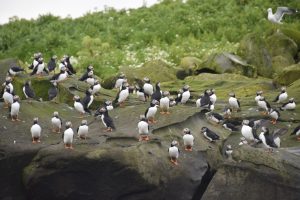
A group of puffins seen on our Puffin Express tour from Reykjavik

The puffin parents do not spend too much time in their burrows and in fact mostly fly in and out to sea to hunt for fish, especially once the puffling is born and they have to start taking turns feeding it. The little islands are also cut off from the mainland and are protected areas, thus we are not allowed to walk on them – we would have a hard time finding a stable way in between all these burrows anyway! That means, our best chance to see puffins from Reykjavík is by boat, for example on our 1-hour long Puffin Express Tour 

Our boat Skúlaskeið or Rósin will take you as close as possible to one of the small islands, either Akurey or Lundey, depending on the tide, to enable you to observe these adorable little seabirds as they sit on the water surface or fly all around us. You can also watch them sit in front of their burrows on the island, with the help of one of our binoculars. Our expert guide will then also tell you all about these seabirds and their adorable antics. So, even if you’ve seen puffins in other parts of the country, this tour may still be a great way to spend your time should you want to experience and learn more about Icelandic nature even while staying in the urban capital! Just a heads-up though – you will only get to see adult puffins, as the pufflings stay hidden inside the burrows until the very end of Summer, when they are grown enough to leave the burrow on their own. 

Puffins in Reykjavik

The Puffin Tours leave the harbour several times a day, from May until the 20th of August. Check out this link for details! Although the puffins may arrive a bit earlier than May, we start the tours only once we are certain that we can show you the most abundant numbers of puffins on the islands.  

If you are in Iceland just before May, you can still join one of our Whale Watching tours and see puffins out at sea. You will most likely encounter them even during our Whale Watching Classic tours, so join one of them for a chance to see both whales AND puffins! Our RIB (the speed boat) that starts going out in mid-April will make a stop at one of the puffin islands as well just before heading out further to sea to find the whales, so you will also get a closer look at the burrows and puffins sitting on land. 

Puffins in Reykjavik

To summarize, puffins do live very close to Reykjavík in the summer, but since these are seabirds that are clumsy at flying, they prefer to stay out at sea and only land on small islands a little off the shore of the capital. Thus, your best chance to see them while staying in Reykjavík or its near surroundings is during a trip on any of our three main tours: Puffin Watching, Whale Watching Reykjavík and RIB Express! 

Written by Sophie Kass 

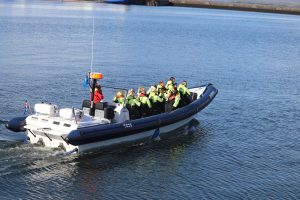
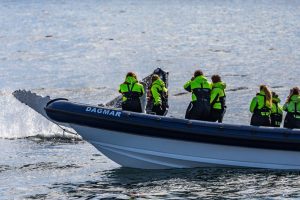
Aside from our Classic Whale Watching Tour on our boats Andrea and Lilja, you also have the option to book a RIB Express Tour with our rigid-hulled inflatable boat (RIB) Dagmar. Custom-built in the UK for our company in 2017, she is a speedy beauty that can seat up to 12 passengers plus captain and guide, and allows for a wonderful 2-hour roundtrip in our Faxaflói bay. This can be handy if the 3 to 3 ½ hours of our Classic Whale Watching Tour does not fit your schedule. 

RIB Express Tour – All about a tour on our RIB Dagmar

Dagmar is equipped with suspension seating, or “shock seats”, for extra safety and comfort while on board. All of the seats are thus extremely comfortable and bounce along with the movement of the boat, cushioning the impact with the waves even at very high speed. These seats have been proven to be the best kind of seating for a RIB, thus making our company’s boat the most comfortable ride out of all the other RIBs starting from the Reykjavík harbour! 

For further comfort and safety, all passengers are given cosy, warm flotation overalls to wear over their clothes, as well as googles and gloves, plus a non-disruptive life vest. That way, comfort is guaranteed on board! Here you can read an article to know how to dress for a whale watching tour. We kindly ask you to show up 30 minutes before your scheduled departure, since staff – usually the captain and the guide who will be on your tour – will help you get settled with all of these items. After you check in with one of the Special Tours offices, you should go to one of the little wooden huts at the west side of the old harbour (on Ægisgarður street) which bears our sister company’s name Reykjavík By Boat. This is where our staff will prepare you for your journey. There is also a restroom here if you want to use it before putting on the overall, which we recommend, as during the cruise there will be no access to a restroom. When all passengers have arrived and are suited and life-vested up, we will walk to the boat together, where everybody can choose their preferred seat. There should be something for everybody – the more adventurous ones may sit in the front, while those who prefer a little bit less movement may sit further towards the back. 

RIB Express Tour – All about a tour on our RIB Dagmar

While we are cruising, it is best to stay seated in your chosen seat, but when we stop at sea and the captain or guide tells you that it is safe, it is fine to walk around carefully to get the best view. Feel free to bring your camera, mobile phone and/or GoPro to take photos or videos! They should be absolutely safe on board. 

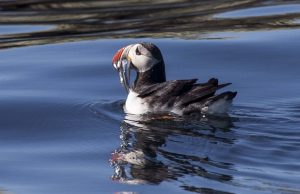
With Dagmar’s extraordinary speed of up to 32 (~59 km/h) knots, there is more than enough time to pay a visit to one of the puffin islands, Akurey, situated on the way out into the bay. The puffin season in Iceland is from May to late August. Since the boat is also very narrow and streamlined in shape, it can get extremely close to the island, allowing for some bird-watching as the puffins fly in and out of their nesting burrows on the island towards the sea for fish-hunting. Sometimes, the puffins sitting on the sea surface get extremely curious and come really close to our RIB, so that you can admire their colourful beaks in all their beauty! Read this article to learn all about Puffins near Reykjavík.

RIB Express Tour – All about a tour on our RIB Dagmar

After a stop at the puffin island, we head out to sea. Dagmar can reach the summer feeding grounds of the whales, dolphins and porpoises in about 20 minutes, but whales have been sighted very close to the harbour before, so it is good to keep an eye out as soon as we get going! Since the guide and the captain will be seated behind the passengers during the cruise, you can always point in the direction where you see something of interest, should our experienced crew have missed it. If you raise one arm in the air during any time of the tour, we will always stop going fast and the guide will come to you to inquire whatever it is you want to ask, or if you have any issues. 

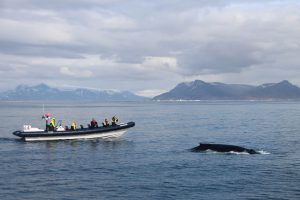
Once a cetacean – whale, dolphin or porpoise – has been spotted anywhere, we will head towards it and go down in speed as we approach the zone where the animal last came to the surface. While still maintaining a respectful and legal distance, there should be plenty of opportunities to get some good views of these fascinating animals. Since Dagmar is so low and close to the water surface, you will be almost at eye level with these animals when they come up for a breath.  

RIB Express Tour – All about a tour on our RIB Dagmar

Of course, it depends on the animal how much it wants to show itself. Some of them are just not in the mood for antics and keep minding their own business with the boats around, just showing the tops of their backs as they come up for breath in between longer dives. Sometimes, however, we get extremely lucky and the animal is in a playful and curious mood and it may start showing more of its body by sticking out fins, its tail, or its entire body out of the water with a breach! This is surely the most breath-taking behaviour of cetaceans that humans get to experience. However, it can also be amazing to just watch the animal do its thing, swimming and diving in certain intervals, to learn more about the natural behaviour of each different species, and to simply marvel at its size and beauty. The guide will be around whenever we stop and explain all of the behaviours we get to witness, as well as provide lots of extra information about all of the different species of the bay. 

Dagmar offers a once-in-a-lifetime opportunity to see the whales in their summer habitat from up close. Some of the whales and dolphins seem to have started to enjoy the attention they receive from our boats, and sometimes come towards us out of their own volition and appear to do some human-watching. They are always gentle and careful whenever they come close to our boats, so you never have to worry about there being any danger. The most magical moments happen whenever we can stop Dagmar’s engine entirely and there is a whale, or possibly several cetaceans, swimming around us, checking us out while we rejoice at getting such good views of them! Sometimes they even come within touching distance, although as this is wildlife, we would be at our best behaviour if we refrained from actually trying to touch them, since you never know how the whales might react. Still, an extra sense that you may not have expected could be part of the experience of whale watching: sometimes, when they exhale close to us, or in the right wind direction, you may smell their fishy breath! Especially minke whales are known to have a bit of a smelly breath, which earned them the nickname stinky minke. 

RIB Express Tour – All about a tour on our RIB Dagmar

Of course, there may be tours during which the cetaceans are simply not in the mood to show themselves at all. If a tour is not successful, that is, if there are zero cetacean sightings during the entire 2 hours of the tour despite the best efforts of the crew, you will get the chance to try again, this time on our Classic Whale Watching Tour, which is usually held on Andrea. Just e-mail our office to reschedule for any date after the unsuccessful tour. This possibility to re-try will be available for as long as our company exists, so you will be eligible to go whale watching with us again for free even years after your first tour. That way, you may get to cruise Faxaflói bay two times on two different boats, and you can compare the two experiences for yourself! 

Every morning, the sea conditions are evaluated by our experienced captains, so keep an eye out in your e-mails for possible cancellations on the set day of departure. Since Dagmar is more sensitive to the movement of the sea, it could be that the weather conditions do not allow us to take her out on certain days, while bigger boats may still be able to go out. The wind in Iceland can be rough, even in the height of summer! If the weather still allows for Andrea to go out on the days where the RIB Express Tour is cancelled, you will be offered to re-book your tour for the Classic Whale Watching Tour (and you will get reimbursed for the difference in price). You can also choose to try your luck with Dagmar again on a different day, subject to availability. Just call or e-mail our office and tell us what you prefer. If you absolutely cannot make it again during your stay and your trip keeps being cancelled, you are eligible for a complete refund. 

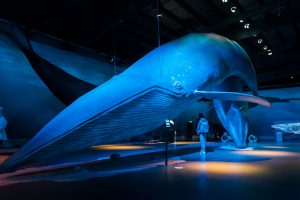
As if all of this wasn’t great enough, you will also be given a free ticket to go to the Whales of Iceland museum in the harbour after your trip. Located in Fiskislóð 23-25, 15 minutes walking distance from the old harbour where our boat tours start, you will find this museum which displays 23 life-sized models of all of the whale species that have been seen in Icelandic waters. Here, you can experience the true size of these animals out of the water, by standing right next to or underneath these fascinating creatures in ocean-atmospheric light. The museum is open from 10 am – 5 pm and plays a documentary at 11 am and 2:30 pm which lasts 60 minutes. There is also an option for a guided tour in English at 10:30 am and 2pm included in the ticket. If you come at any other time, free audio guides will be handed out to you in a variety of different languages. 

RIB Express Tour – All about a tour on our RIB Dagmar

As for the tours on Dagmar, they are offered from April 15th onwards until the end of October each year. During the time of reduced social contact, the tours are offered at 11am and 2pm each of these days. Private tours are available upon request. The tour is only offered for children from 10 years onwards, younger children unfortunately cannot join us on the RIB Express Tour for safety reasons – they are more than welcome on our Classic Whale Watching Tour, though! If you have any more questions about the tour, feel free to reach out to us via phone or e-mail. 

We look forward to having you on board! 

RIB Express Tour – All about a tour on our RIB Dagmar

Written by Sophie Kass 

What to expect on a Northern Lights boat tour

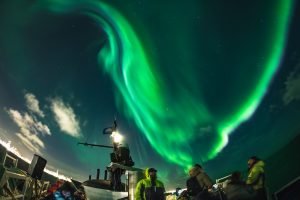
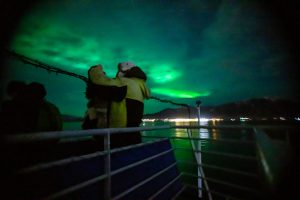
Between September and mid-April, Special Tours offer Northern Lights boat tours in the evenings. The tour lasts for two to two and a half hours and takes our passengers to the fjord of Kollafjörður, north of Reykjavík. There is no need to go very far, only far enough to escape the light pollution of the city. Aboard our boats Andrea and Lilja, our passengers can enjoy a guided tour, snacks and drinks at the cafe, and of course, hopefully, a beautiful Northern Light show and take many photos.

As we leave the harbour, the guide will instruct the passengers about safety and go over everything that is available onboard for their comfort. The use of a microphone allows everybody to hear the guide, wherever they are on the boat, so everyone can move around freely without missing out on anything. Our boats Andrea and Lilja are divided between indoor and outdoor areas. Therefore people have the possibility to go out to look at northern lights, but also to go back in to warm up and rest. They can also borrow the warm overalls there are onboard in order to brave the cold. A cafeteria is open throughout the whole tour and serves all kinds of hot drinks, alcoholic and non-alcoholic beverages, including Brennivín (a typical Icelandic snaps) and Icelandic beers (Gull, Brío) Christmas drink Malt and Appelsín, waffles and snacks. We recommend the combo of hot chocolate and waffle for an instant happiness boost. You can try the Icelandic way, and have your waffle with rhubarb jam and a lot of whipped cream!

What to expect on a Northern Lights boat tour

During the tour, the guide will share knowledge about the physics behind Northern Lights, where they come from, how they form, their different colors, etc. They will also tell you about the many stories and legends auroras inspired throughout History. They can help you set your camera and will assist you with finding the lights in the sky. A camera is an essential tool when chasing the auroras. Not only it allows you to keep a trace of this magical moment, but it also helps you to find them. Faint northern lights can easily be mistaken for grey clouds by our eyes. Fortunately, your camera would not be fooled and would detect their real colors. It allows you to know where the auroras are while waiting for them to become more active and start showing glowing colors for your eyes too.

While cruising in the fjord of Kollafjörður, we encounter many small islands. The biggest one is Viðey, it is now uninhabited but remains of a village and a school still stand and can be visited in summer. The other islands are nesting grounds for many seabirds, like the Cormorant. The islands of Akurey and Engey also welcome puffin colonies every summer, who come there to nest and breed. This is where the Puffin Express tours of Special Tours takes you to see these fascinating birds. This part of the fjords also offers beautiful views on the snowy mountains around the capital, even by night, like mount Esja, Úlfarsfell, or the ski resort of Bláfjöll.

You can also admire the lights of Reykjavík in the distance. There you cannot miss the concert hall of Harpa, and the church of Hallgrímskirkja. If you visit Iceland around the time of New Year’s Eye, you might be able to see fireworks in the sky of the capital. Icelanders love fireworks and will often continue to fire them long after the 1st of January. They are sold by the Search and Rescue Association in order to fund their operations, which is one more reason to buy big quantities every year.

What to expect on a Northern Lights boat tour

As we run this tour between September and mid-April, a big part of those tours is going to happen during the heart of the winter. Our passengers should be prepared for all kinds of weather conditions, winter conditions and cold temperatures, strong wind, etc. This is where the overalls and the warmth of the inside of the boat are gladly welcomed. You also need to be well prepare: What to bring on your northern lights cruise. Hot chocolate is also the best remedy when feeling very cold.

As we are only sailing inside the fjord and not to the open ocean, conditions swell-wise are not often rough, and people sensitive to seasickness should not be too bothered by that. But seasickness tablets are offered on board for whose who need them.


What are northern lights and what are the right conditions to see them ?

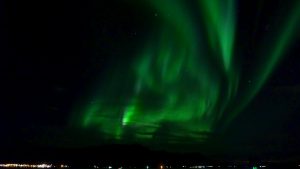
Northern Lights, also called polar lights or Aurora Borealis are a display of light in the sky, that comes in different colors and different shapes. They are a completely natural phenomenon, and it is impossible to predict if they are going to be out, when, and for how long. Therefore, we can never guarantee sighting. But we only go out when the conditions are favorable.

Favorable conditions here in Iceland to see the Northern Lights are a clear sky and darkness. Darkness is an important factor, as auroras occur all year around at any time of the day or night, but are only visible when it’s dark enough to see them. Therefore, Northern Lights are visible in Iceland as soon as night comes back, after many days of constant daylight in summer. That is why we operate our tours only in the evening from September until mid-April, as the rest of the year has only few hours of darkness or not at all.

Besides darkness, you also want a clear or partly clear sky, which means that our tours are weather dependent, and we only go out when the conditions are good enough in terms of cloud coverage.

Northern lights happen inside an oval-shaped band around the North pole. This band encompasses Iceland, Scandinavia, Siberia, Alaska, Northern Canada, Greenland, etc. If the auroras activity is high, this oval can stretch southwards, and auroras can be seen further south than usual. But Iceland is at a high latitude and therefore always inside this oval, so we can potentially see them even on a low-activity night. And we have in the past seen amazing display of auroras when the forecast showed little activity.

Here you can read: How to read a northern lights forecast.

And some other times, even though all the conditions seem good, auroras simply don’t appear in the sky. Their appearance depends on solar activity, which is something we try to predict but cannot know for sure.

In case we do not see the Northern Lights, all our passengers are invited to join another tour free of charge to try again.

Written by Claire Dutilleul

What to expect on a Northern Lights boat tour