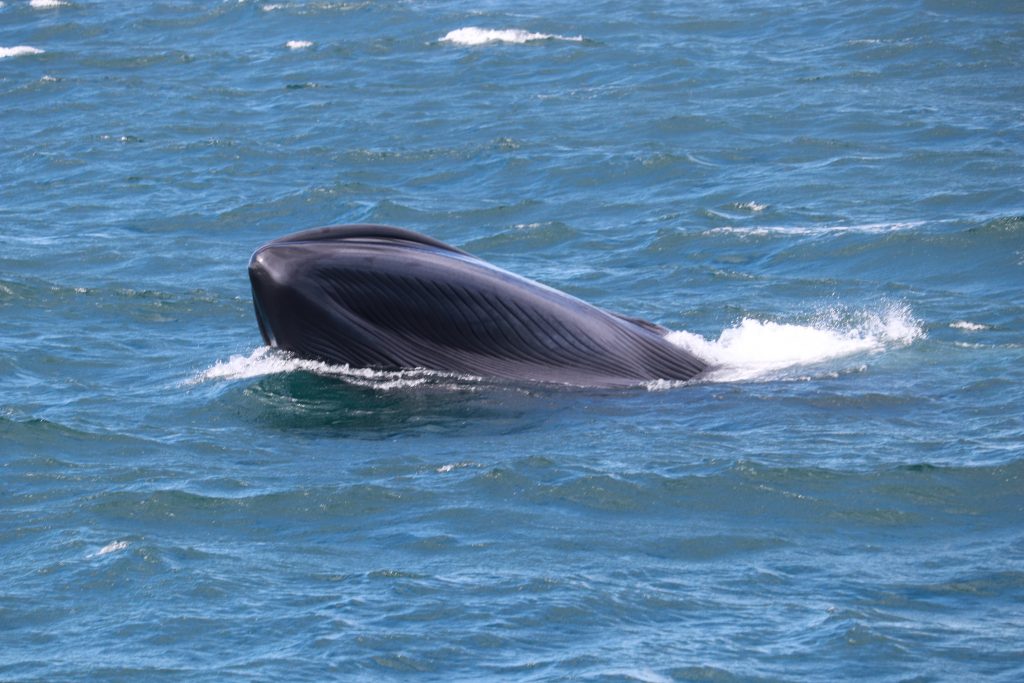
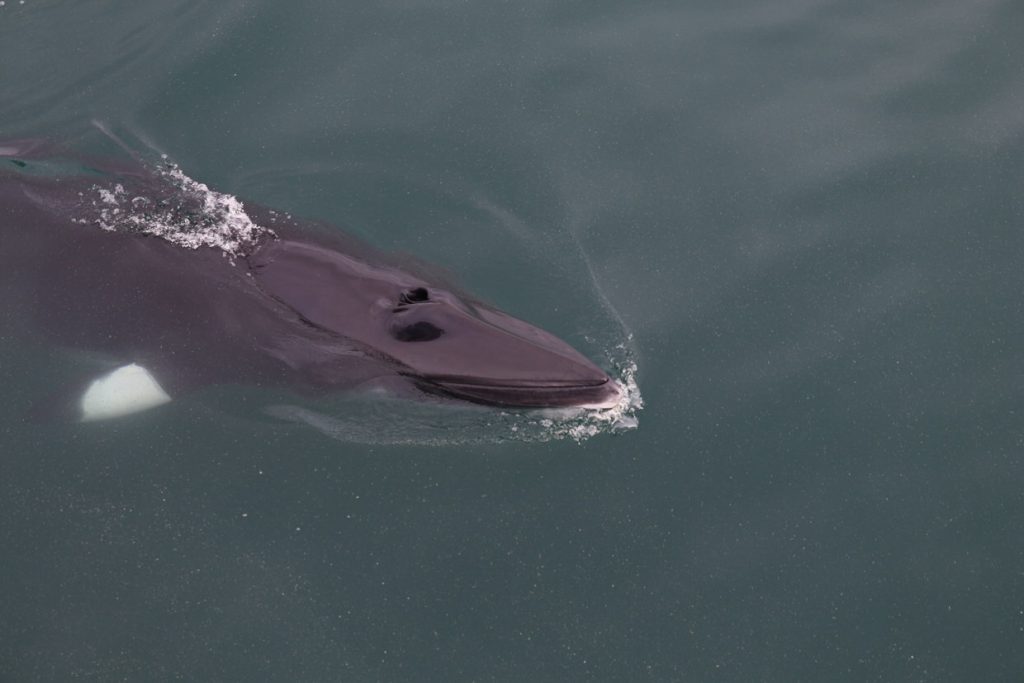
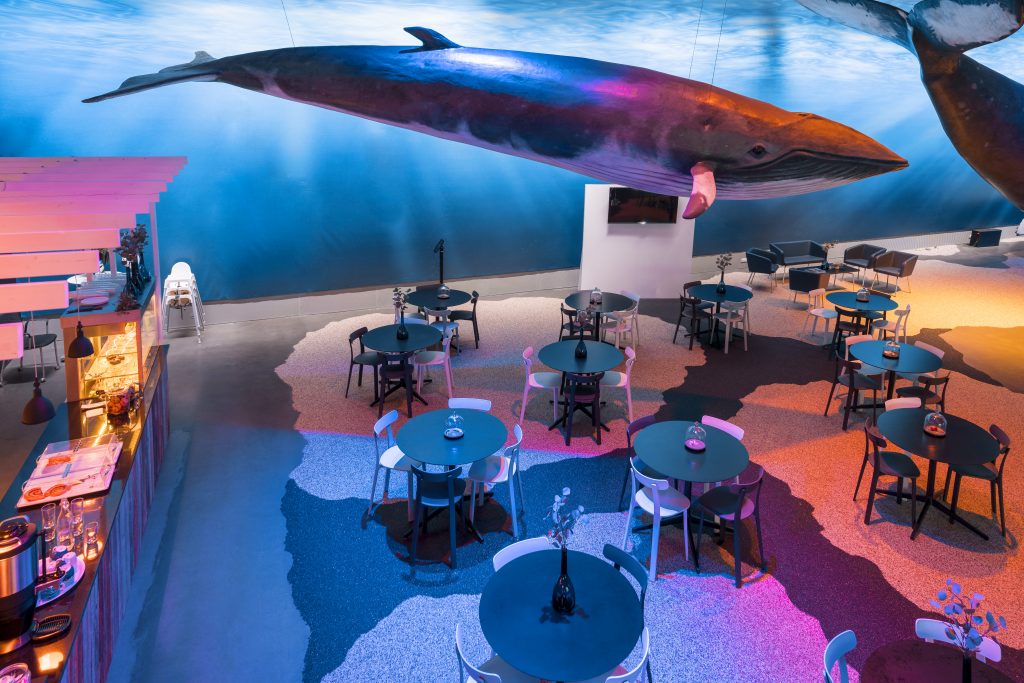
Migration is the regular, repeated movement of an individual or group of individuals between two or more locations. Migration usually occurs over relatively long time scales – periods of weeks or months rather than hours or days. 

Among cetaceans, migration is most well known in baleen whales. Most species migrate between polar and temperate feeding areas in summer and subtropical to tropical breeding and calving areas in winter. These are large-scale, seasonal movements, that most (if not all) of a population undertakes. 

Why Do Whales Migrate

Gray whales are champion migrators, travelling up to 25,000km on their annual round trip from Mexico to Siberia. Image from the International Whaling Commission.

But why bother? These long journeys are very energetically costly, especially for pregnant females or mothers with young calves. In addition to this, while temperate and polar regions – baleen whale feeding grounds – are rich in prey, the tropics are relatively sparse and finding prey there can be difficult. At first glance, migration doesn’t appear to have much benefit to whales. 

There are four main theories that explain why baleen whales make these arduous journeys every year. 

Cold water 

One theory is that whales move away from their feeding grounds before calves are born because these cold waters would pose a risk to the young calves. However, smaller marine mammals than baleen whale calves can endure these seas year-round, so the low temperature may not present much of a risk to the relatively large calf. Perhaps a more pertinent concern would be the rough and dangerous sea conditions in temperate and polar regions over winter.  

Following food 

Although these colder regions are much richer in marine life – and therefore prey – during summer, they are ruled by the seasons. In winter, food becomes more scarce. After taking full advantage of the summer boom near the poles, the warmer, tropical seas have enough to provide for baleen whales during their ‘fasting’ season.

Escaping killers 

Killer whales, despite being cetaceans themselves, are the most significant threat to baleen whale calves. Although this apex predator is found throughout the world, killer whales are less abundant in the tropics than in temperate regions. Therefore, migrating to these relatively safe, warm waters before giving birth to their calves means that baleen whales can keep their young out of the reach of predators when they are at their most vulnerable stage. 

Ancestral heritage 

The fourth and final suggested driver of migration is that it is part of their heritage and culture – baleen whales migrate like this because their ancestors did. In the past, when colder waters were nearer to the equator than they currently are, these migrations would not have been as long. Therefore, the energetic benefit would have been much greater: a season of intensive feeding in very rich, cold water increases the whales’ energy reserves which in turn increases their chances of successful reproduction. Over time, as cold water retreated poleward and ice masses melted, these migrations became gradually longer and longer. 

Although general consensus now is that killer whale predation is probably the most important driver of migratory behaviour, any or all of these factors could be involved. 

Most of the baleen whales that we see around Iceland are migratory, visiting to feast on the rich array of plankton and fish in the waters here over summer. But not all baleen whales make the trip back south – some stay over winter without returning to the breeding grounds. This is evidence that baleen whales do not have to migrate. 

Indeed, some do not migrate at all. Notably, the bowhead whale remains in freezing Arctic waters for the whole year; although they move seasonally between different regions, this species does not undertake long journeys between distinct feeding and breeding grounds, nor do they undergo migratory fasts. At the other extreme, Bryde’s whales live in tropical regions for the whole year and do not migrate to colder feeding grounds. And, despite generally being a migratory species, the population of fin whales in the Mediterranean do not migrate either.

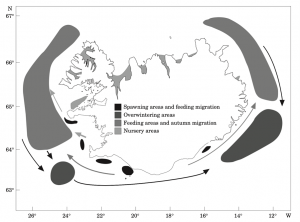
Although the term ‘migration’ is most associated with the great whales and their immense annual journeys, this is just one way in which cetaceans migrate. For example, killer whales in Iceland move between different regions at different times of year. This migration is not associated with distinct breeding and feeding grounds: the killer whales migrate because their prey do. Icelandic herring move between their overwintering grounds and their summer spawning grounds, and the killer whales follow them.
 

Why Do Whales Migrate

Icelandic herring shoals migrate between their overwintering grounds and their summer spawning sites. Image from Jakobsson and Stefánsson, 1999. 

Not all Icelandic killer whales are herring specialists, and not all of them have seasonal movements that are closely tied to the herring. For example, some killer whales which feed on herring in Iceland during the winter travel to the north of Scotland in summer to hunt seals there. 

Whether they are herring specialists or have a taste for seal, Icelandic killer whales follow their prey. These movements are regular, repeated, and cover long distances and time scales – in other words, a migration!  

So there are many reasons why whales and dolphins migrate, and many different ways in which they do so. From the record-breaking pilgrimage that gray whales make up and down the Pacific coast of America, to the sea ice-dictated movements of beluga whales between open sea and coastal estuaries, to the killer whales which follow their prey on their own migration. Cetaceans, it seems, are ruled by the seasons just like us. And here in Iceland we should be especially grateful for this, as it is the changing of the seasons that brings these wonderful creatures back to our shores, year after year. 


Written by Eilidh
Welcome to Iceland. Thanks to the airlines cheap flight incentives, this Nordic capital has boomed in the last few years. Located not too far from the Silfra rift, where the North American and European continental plates meet. Where in winter you can take in the spectacular Northern Lights or the Midnight Sun. Well, most of the time. As anyone who has spent any amount of time here can tell you the weather can be quite cupreous indeed. Going from clear skies to gale force winds and rain that appears to fall sideways in a few minutes. Fortunately, there are plenty of refuges to escape the weather.

rainy day in Reykjavik

Whale museum in Reykjavik

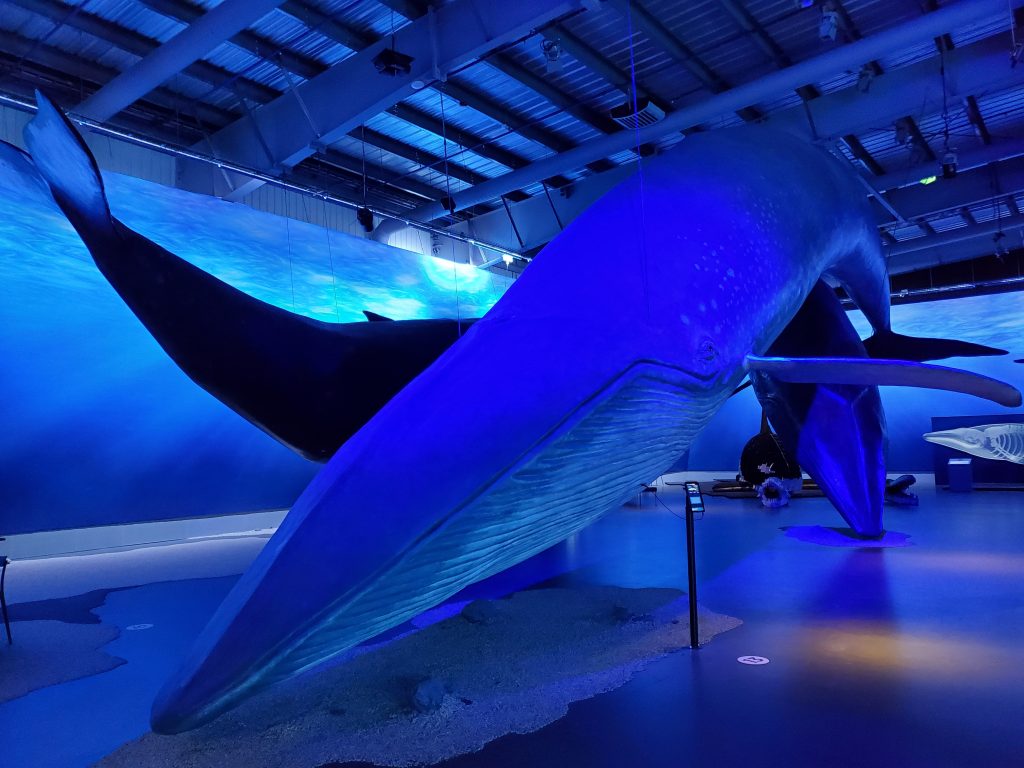
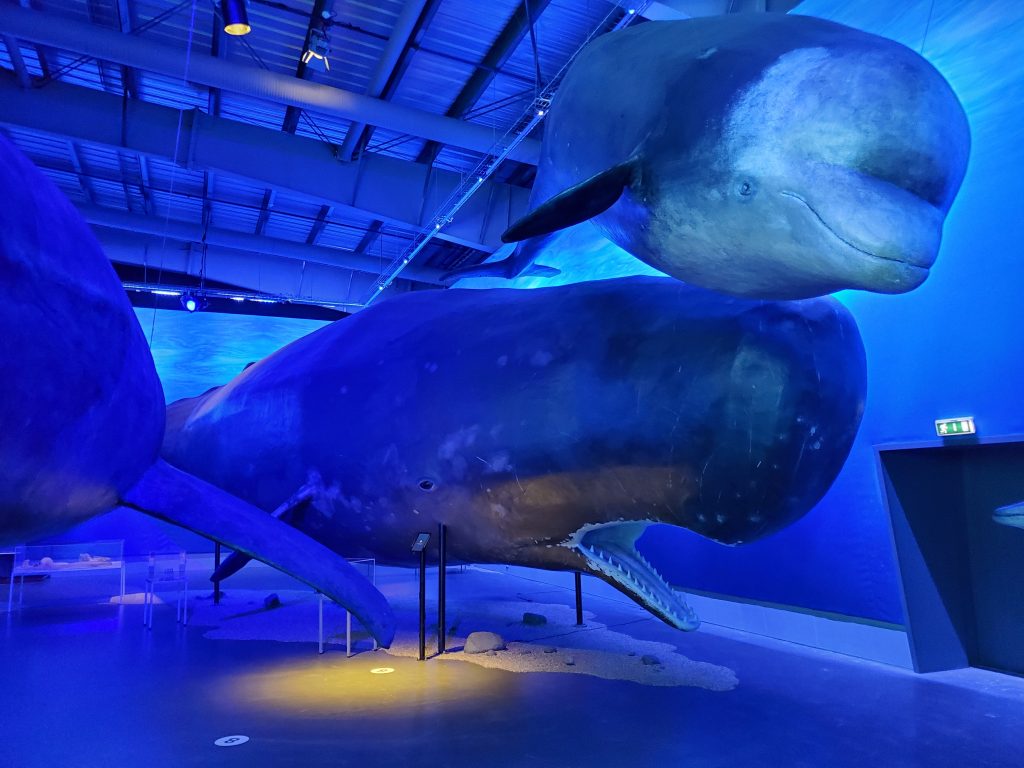
If you can’t go out on the water, why not go under it? Figuratively at least. At Whales of Iceland we have 23 life sized models of whales, dolphins and porpoises which can be seen in Icelandic waters. All the whales are to scale and based off of specific individuals, including Keiko. The whale featured in the film Free Willy that was released from captivity into Iceland in 2002. The admission includes an audio guide in 12 different languages as well as daily live guided tour in English at 10:30 and 14:00 by our expert staff.

While you’re drying off, make sure to check out our café that´s operated in conjunction with Reykjavik Röst. Where you can take in the ambience of our simulated underwater setting while having a coffee, beer or wine or a nice pastry of your choosing.

Twice daily, at 11 and 14:30 we screen the Emmy award winning documentary Sonic Sea. Narrated by Rachel McAdams, the documentary talks about the threats facing whales such as sonar, seismic activity and shipping boats and what we can do to prevent it. Featuring stellar underwater photography and interviews with top marine biologists such as Jean-Michel Cousteau, Sylvia Earle and Kenneth Balcomb, the film is moving and illuminates this little known threat facing whales.

rainy day in Reykjavik

Do you want to Fly over Iceland?

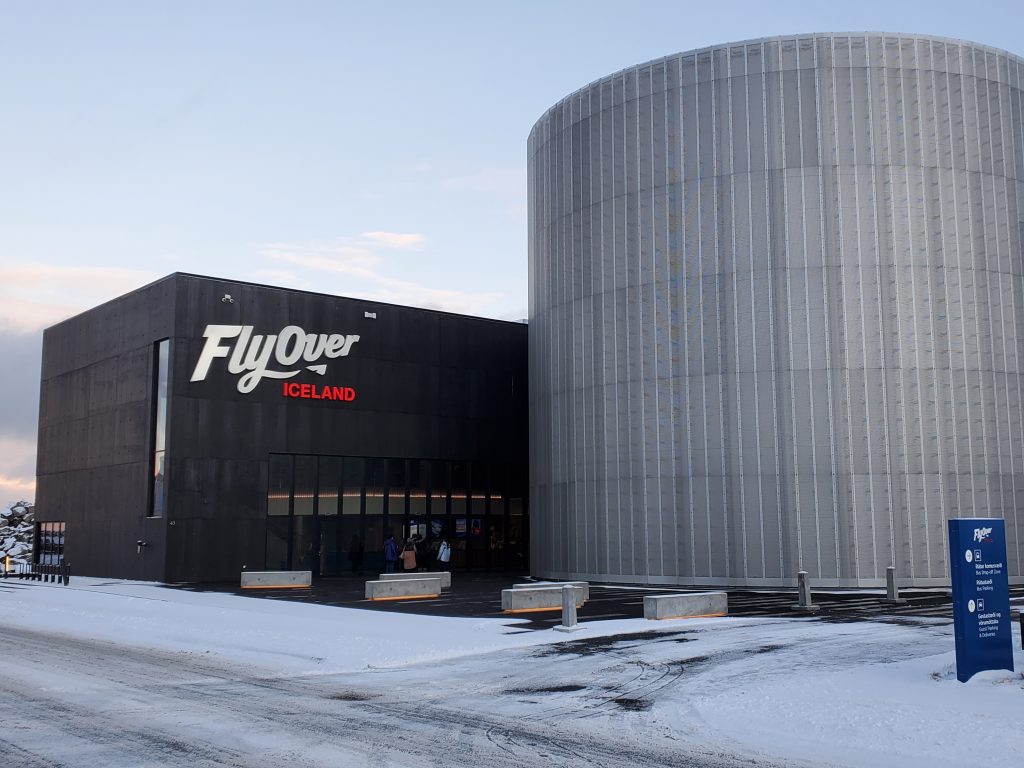
Right next door to us is FlyOver Iceland. What better way to experience the diverse sites of Iceland on a rainy day than in a state of the art ride that features some of the most spell binding aerial footage of Iceland ever recorded. From its vast majestic glaciers, to the windswept highlands, to Þrídrangaviti the world´s most remote lighthouse, Flyover Iceland captures and distills this country’s various sites.

rainy day in Reykjavik

Are you a Viking? Check out the Viking museum in Reykjavik

If you´re into Viking history or the Settlement Period here in Iceland than the Saga Museum is not to be missed. Created by Ernst Backman, the Saga Museum takes you through Iceland´s discovery by the Vikings in the 9th century all the way through to the Reformation in the 1500´s. Inside you will meet the personages that forged Iceland´s history from Leif Erikson to Egil Skallagrímsson brought to life in exquisitely carved silicon figures that will make you believe you are amongst the Vikings.

rainy day in Reykjavik

What to do in the Grandi area?

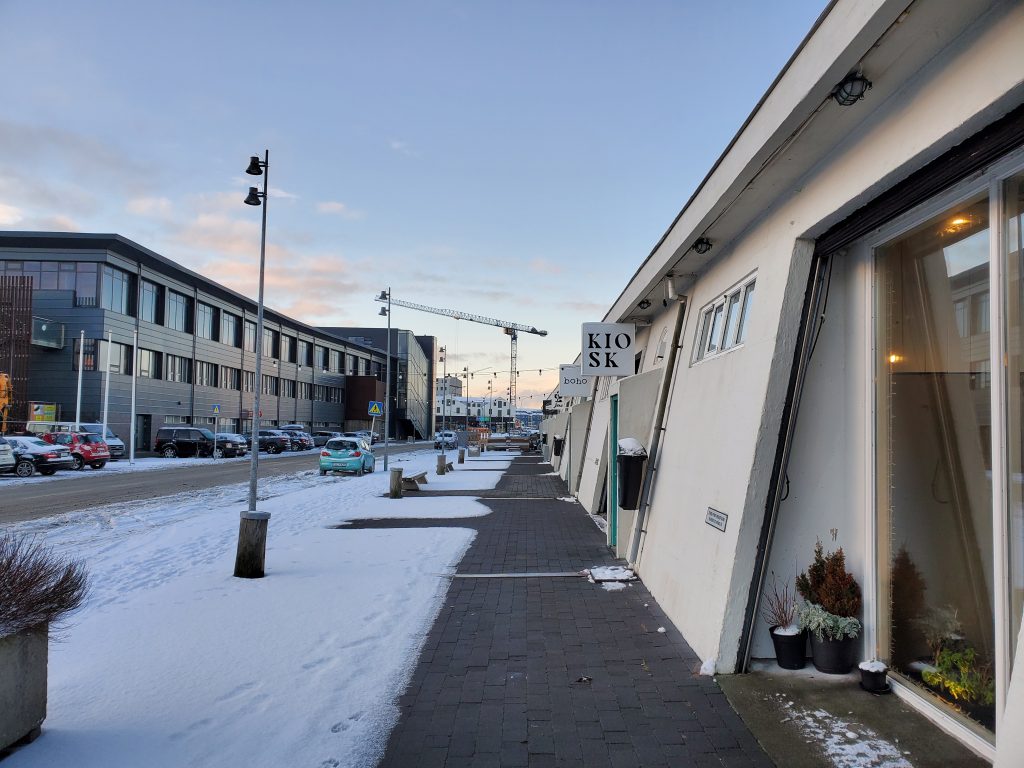
If you´re in the mood for shopping, the Granda Area (of which Whales of Iceland is located), has become home to some of Reykjavik´s most dynamic and eclectic boutiques. Pop in and maybe find that perfect lopapeysa (Icelandic wool sweater) or avant-garde jumper and necklace. If you´re in the mood for a proper meal there is also Kaffivaginn (Iceland´s oldest restaurant), the scrumptious breakfast cafe Cukoo´s Nest or the Grandi Mathöll where you can choose from over 8 different food booths. Check out this Reykjavík travel guide for more information:

Get more ideas on what to do on the <a href=” https://www.kayak.co.uk/Reykjavik.11024.guide> Reykjavik Travel Guide</a>.

rainy day in Reykjavik

Sea angling in Reykjavik: Enjoy the view while fishing for your dinner

Everything you need to know about Sea Angling in Reykjavík

Between May and September, our affiliated company Special Tours offers some really fun Sea Angling tours you shouldn’t miss out!! They set out on Rósin, the company’s fastest passenger boat which provides the comfort of indoor seating as well as a spacious environment on the outside deck whilst taking you, in just a few minutes, to the best areas in the bay. With years of experience, the crew knows every secret spot in the Faxaflói bay where to fish for your dinner!!

Sea angling in Reykjavik: Enjoy the view while fishing for your dinner

Just imagine setting your rod while looking at the mesmerizing colours of the beautiful mountain of Esja, or fishing at the mouth of the first fjord to the north of Reykjavik, Hvalfjordur. In exceptionally good days, the crew will sail out into open waters where, if you´re lucky you might even experience the glory of seeing minke whales, humpback whales and white-beaked dolphins swimming in the whereabouts.

In this tour there is place for both experienced fishermen and beginners as well as for those who simply wish to accompany their travelling partners to enjoy the time at sea, where the cozy space allows for a cultural interchange between our passengers and crew which will gladly share their knowledge of the Icelandic seas. And obviously do not worry if you have never fished before, the crew knows all the best on how to help you out…and some of them really enjoy untangling your line!

Everything is provided for you, from the rod to the raincoat, to protect your clothing from getting fishy! All you have to do is to arrive in time at the old harbour to be ready to sail out.

Don’t worry if in the first or second fishing spot you will catch nothing, it is just to build up suspense! It is in fact extremely rare that they come back empty-handed handed, no more than once or twice in the season. Most often than not, so much fish is caught in the first half-hour of the tour that it then becomes recreational fishing. In fact, they advocate for sustainable fishing meaning they will only keep fish from a specific set minimum size (to allow younger ones to be able to reproduce at least once in life). And, once enough fish has been caught to satisfy the passenger’s needs, live fish is returned to the sea.

Whilst you’re enjoying the activity, the crew will fillet the fish and prepare a wonderful banquet for you by grilling it on board and serving it with potatoes and a variety of sauces. This would probably be the freshest fish you have ever eaten, an exclusive experience of its own.

If you’re interested in doing this tour or for further information don´t hesitate to ask our staff at the museum reception where some discount offers might be waiting for you, or book directly on the Special Tour website.


FISH YOU MIGHT CATCH


Atlantic Cod (Gadus morhua)

Sea angling in Reykjavik: Enjoy the view while fishing for your dinner

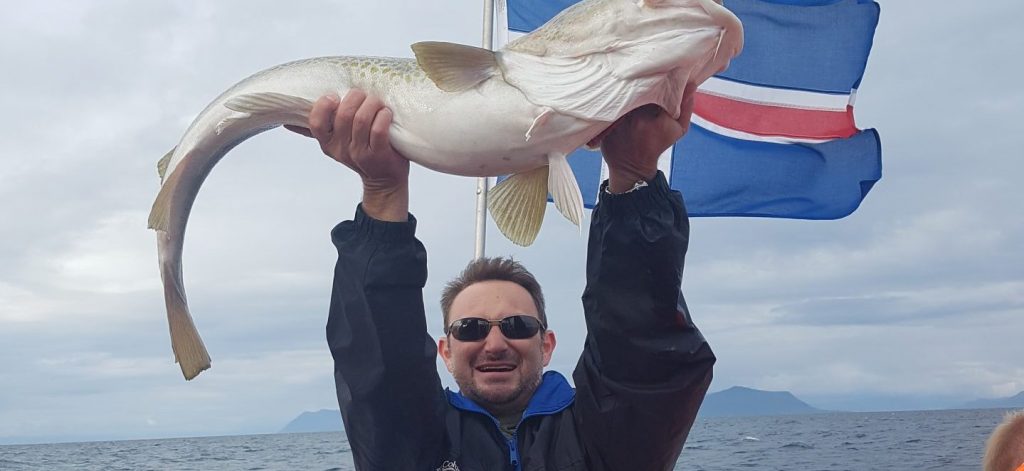
The Atlantic cod is a bottom-dwelling fish. It is so common in the North Atlantic that it comprises the most important fishery of the country. It is also the most commonly caught fish in the Sea Angling tours.

You can recognize them by their greenish-brown to gray colorations on their sides, with a lighter color on their undersides. They also have a lighter-colored line that runs along each side, called the lateral line which is used for sensory perception. They feed mainly on small fish, as well as invertebrates, including urchins, lobsters, and shrimp.


Haddock (Melanogrammus aeglefinus)

Sea angling in Reykjavik: Enjoy the view while fishing for your dinner

Many of these are caught on the Sea Angling tours. They have a silvery-white color on most of their body, but the top of their body can range from a greyish brown to nearly black. Haddock can be distinguished by other fish like pollock from their very distinctive black marking above their pectoral fins, sometimes called the “Devil’s thumbprint” or “St. Peter’s mark”. Their lateral line along the length of their body is also quite dark in color. They feed mainly on shellfish, but also on urchins, sand eels, capelins, and worms.


Atlantic Mackerel (Scomber Scombrus)

Photo from: Brim

Sea angling in Reykjavik: Enjoy the view while fishing for your dinner

 Atlantic Mackerel is a very pretty fish, with a slender torpedo shaped body, and their backs displaying silvery blue-green patterns which shine beautifully with the sun reflection. These colorful tones alternate with black lines that run across the top half of their bodies. They live up to 20 years! Their meat is very tasty, high in oil content and omega 3 fatty acids among other nutrients.


Pollock

Photo from: BritishSeaFishing

Sea angling in Reykjavik: Enjoy the view while fishing for your dinner

Pollock can sometimes be confused with the haddock, but you can recognize the difference as it does not have the distinctive black marking typical of haddock. Above its lateral line it is of a green-gray colouration while the belly is golden. It mainly feeds on smaller fish like sand eels, squids and planktonic crustaceans.


Atlantic Wolffish (Anarhichas lupus)

Sea angling in Reykjavik: Enjoy the view while fishing for your dinner

The Atlantic wolffish, also known as the Atlantic catfish, is a marine fish related to blennies. Most commonly they are purple-brown, or bluish gray in color. They have large and pretty scary mouths characterized by 4-6 sharp, fanglike teeth on both their upper and lower jaws, which is why their Icelandic name is steinbítur – stone biter. They are not as commonly caught on the Sea Angling tours, but when they do it’s always good to let the crew take care of them as their bite is so strong that it could easily break some of your bones. Such a peculiar mouth structure is because they mainly feed on hard-shelled creatures by crushing them, like crabs and other crustaceans, sea urchins and mollusks.

 Written by Guillia

Sea angling in Reykjavik: Enjoy the view while fishing for your dinner

Sea angling in Reykjavik: Enjoy the view while fishing for your dinner

Sea angling in Reykjavik: Enjoy the view while fishing for your dinner


Why go whale watching in Iceland? 

Iceland is a cetacean hot-spot. Twenty-three species of whales, dolphins and porpoises have been recorded in these seas – that is about one quarter of all the known species in the world! 

If you want to learn more about these many different kinds of whales, we recommend a visit to Whales of Iceland, where you can experience the true scale of these gentle giants as if you were swimming alongside them. Several of these twenty-three species are not seen very often – some are only occasional visitors to Iceland, and some are just very shy – so this is a great way to get to know them all. 

But of course, there is no better way to encounter whales and dolphins than to see them in their natural environment. 

Deciding where, when, and how to go whale watching can be tricky. There are a lot of questions involved in planning a trip – but don’t worry, because we have the answers! This guide covers everything you need to know about whales and whale watching in Iceland, including: 


Why are there so many whales around Iceland? 

Seasons in polar and sub-polar regions are extreme. In winter, there is very little light, which means that phytoplankton – microscopic aquatic plants that make their food from sunlight – cannot survive. Phytoplankton are the base of every food chain in the ocean. Without them, there is little food available for any marine animal. 

But in summer, days are long, with almost constant sunlight! In these conditions, phytoplankton flourish: growing into colossal phytoplankton blooms that can stretch over hundreds of miles of water. 

Whales and whale watching in Iceland


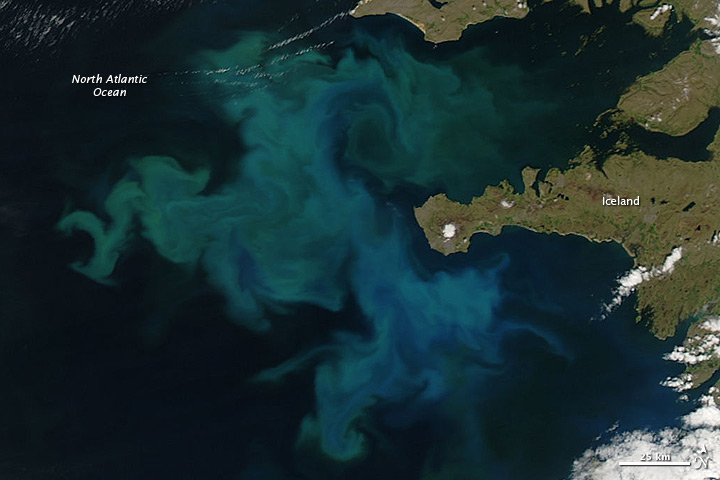
The swirling blue-green area in this satellite image is a phytoplankton bloom – this one stretches about 150km down the west coast of Iceland. Image from NASA. 

Very small animals called zooplankton time their life cycle so that they emerge at the peak of the phytoplankton blooms. The zooplankton rely on phytoplankton for food, but they themselves are food for many, many other animals! 

This intense seasonal ‘boom and bust’ cycle means that Icelandic seas are teeming with life during summertime, and this attracts some of the largest animals on Earth. 


What whales can you see around Iceland, and where is the best place to see them? 


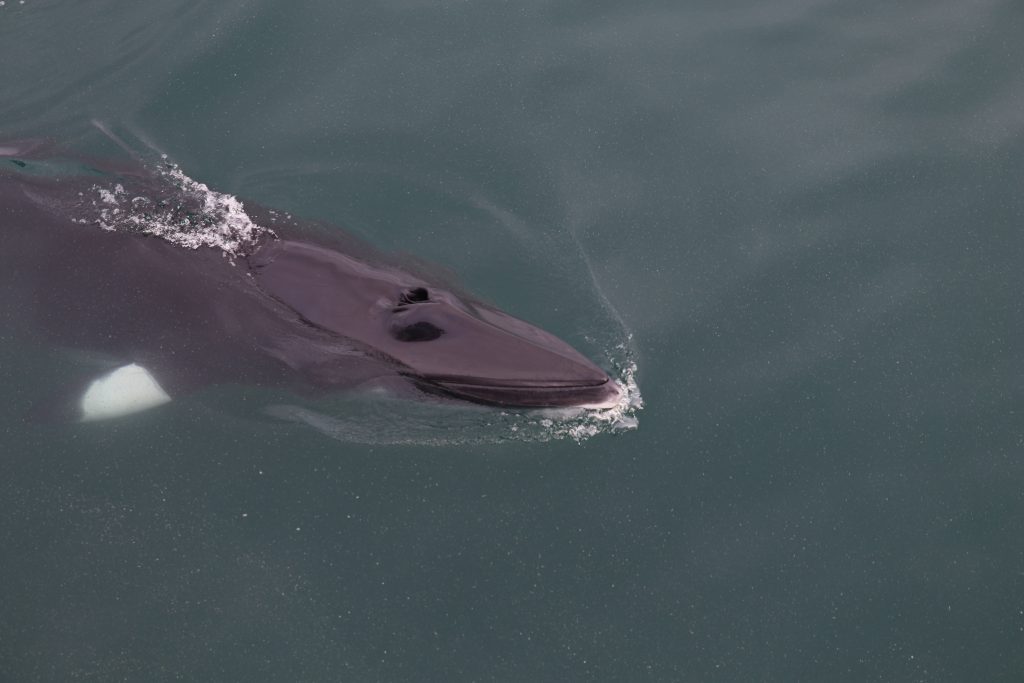
Common minke whale (Balaenoptera acutorostrata) 

The common minke whale is the smallest baleen whale to be found in Iceland. True to their name, they are most numerous marine mammal in Icelandic coastal waters during summer. 

Their distribution in this part of the North Atlantic has changed over the past two decades, so while they are still a common sight in nearshore waters, they are now seen less frequently off the southeast coast than before. There has also been a reported decline in sightings from whale watching vessels in Skjálfandi Bay, which is also probably linked to a change in their distribution. 


Best place to see them? 

Whales and whale watching in IcelandWhales and whale watching in Iceland

What to look out for: 


Humpback whale (Megaptera novaeangliae) 

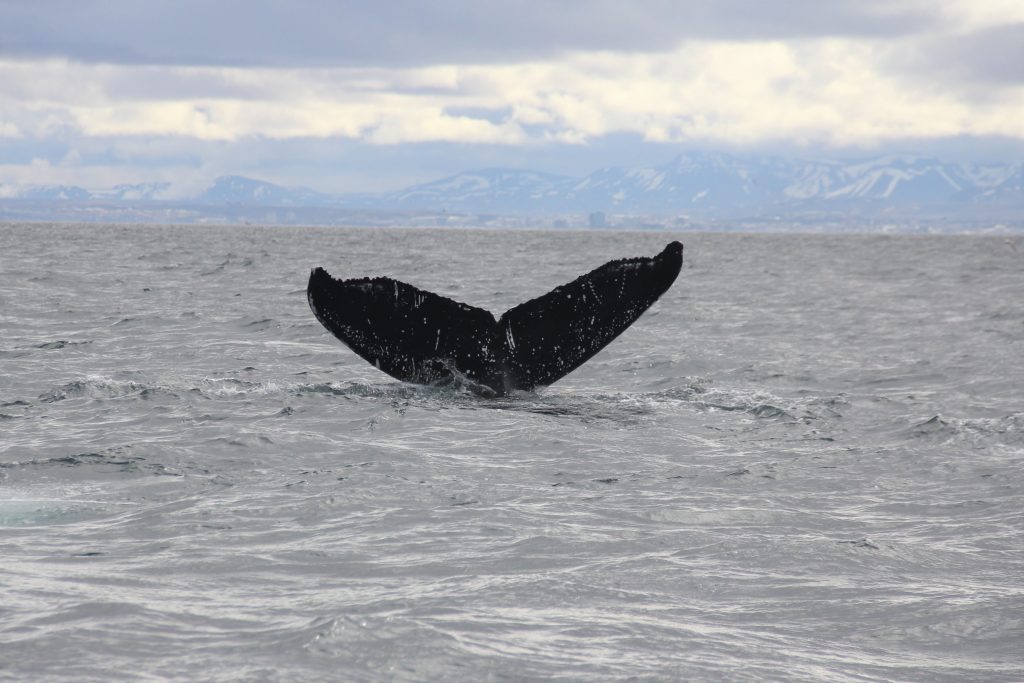
Once hunted intensively, there were very few humpbacks in Iceland up to about 1970. Happily, their recovery has been relatively rapid compared to many of the other great whales, and it is thought that the population here levelled off in around 2000. 

Humpback whales come all the way to Iceland from their breeding grounds in the warm waters of the West Indies. Although most humpbacks only come to feed here in summer, not all individuals make the return trip south – so there is a good chance you could see some humpbacks in winter too. 


Best place to see them? 

Whales and whale watching in IcelandWhales and whale watching in Iceland

What to look out for: 


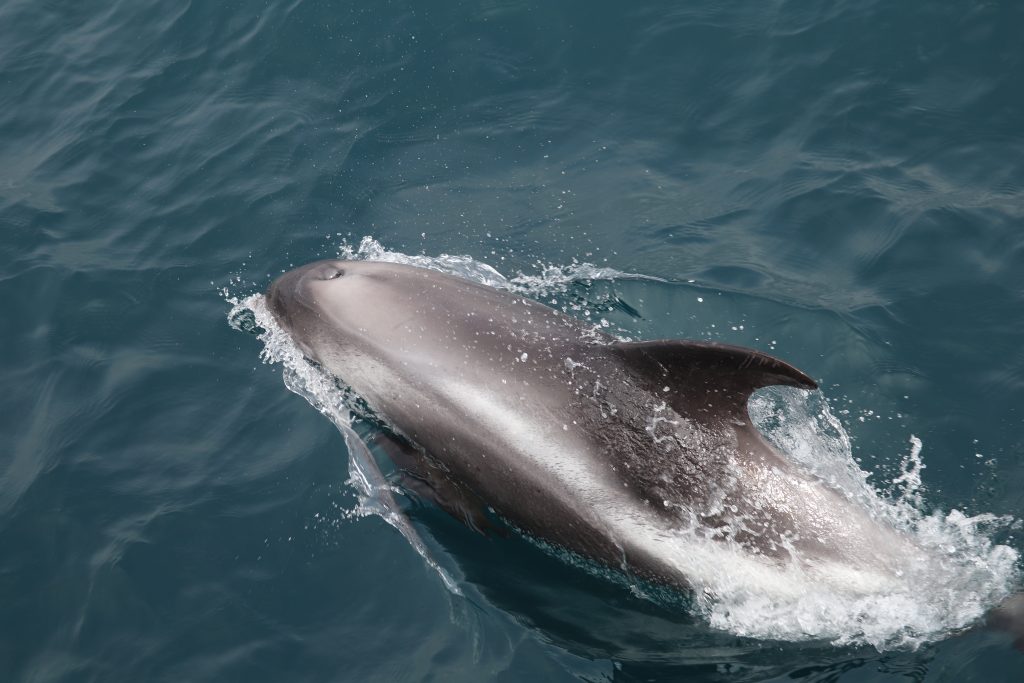
White-beaked dolphin (Lagenorhynchus albirostris) 

Iceland receives several ‘visiting’ species of dolphins, such as bottlenose, common, and striped dolphins, but the white-beaked dolphin is one of the only dolphins resident in Icelandic waters for the whole year. They are also the most numerous dolphins in Iceland. 


Best place to see them? 

Whales and whale watching in Iceland

What to look out for: 


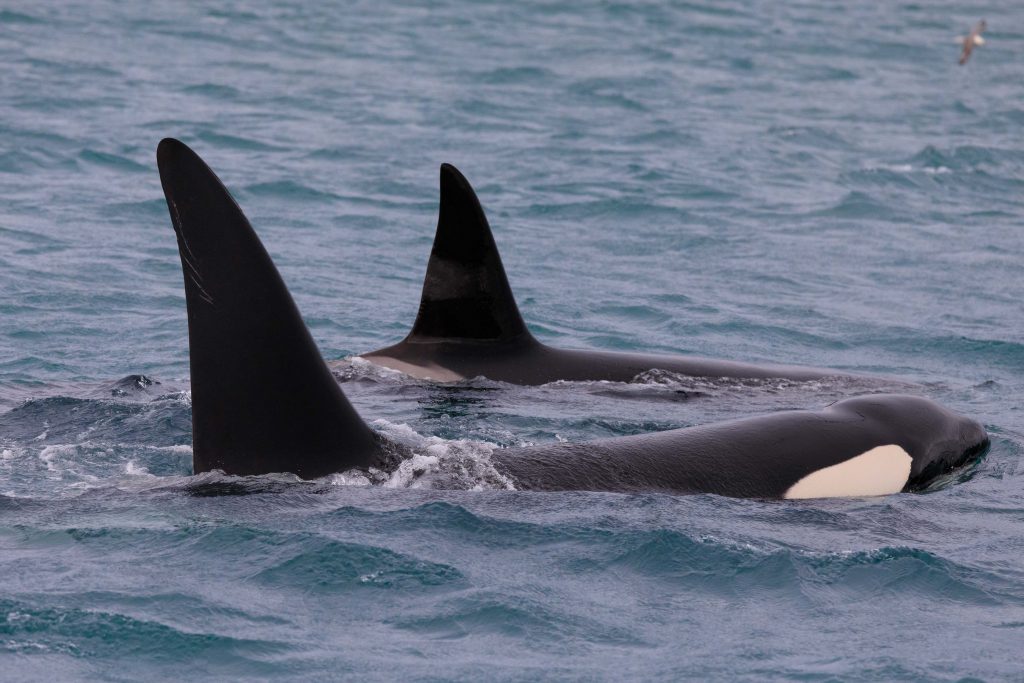
Killer whale (Orcinus orca) 

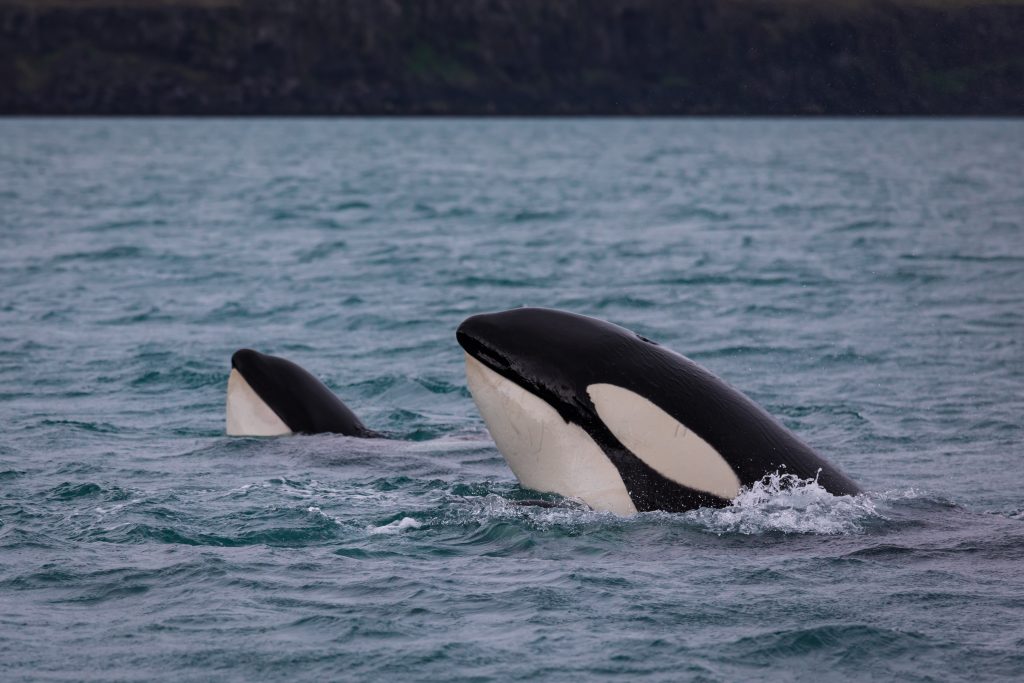
Killer whales, or orcas, are the largest member of the dolphin family. It is thought that killer whales in Iceland feed mostly on herring, but some individuals have a more varied diet and will hunt other fish and even marine mammals. 

Killer whales can be found in Iceland at any time of year. However, they have seasonal residency in different locations – which is thought to be linked to the migrations of Icelandic herring – so to see them you have to be in the right place at the right time! 


Best place to see them? 

Whales and whale watching in IcelandWhales and whale watching in Iceland

What to look out for: 


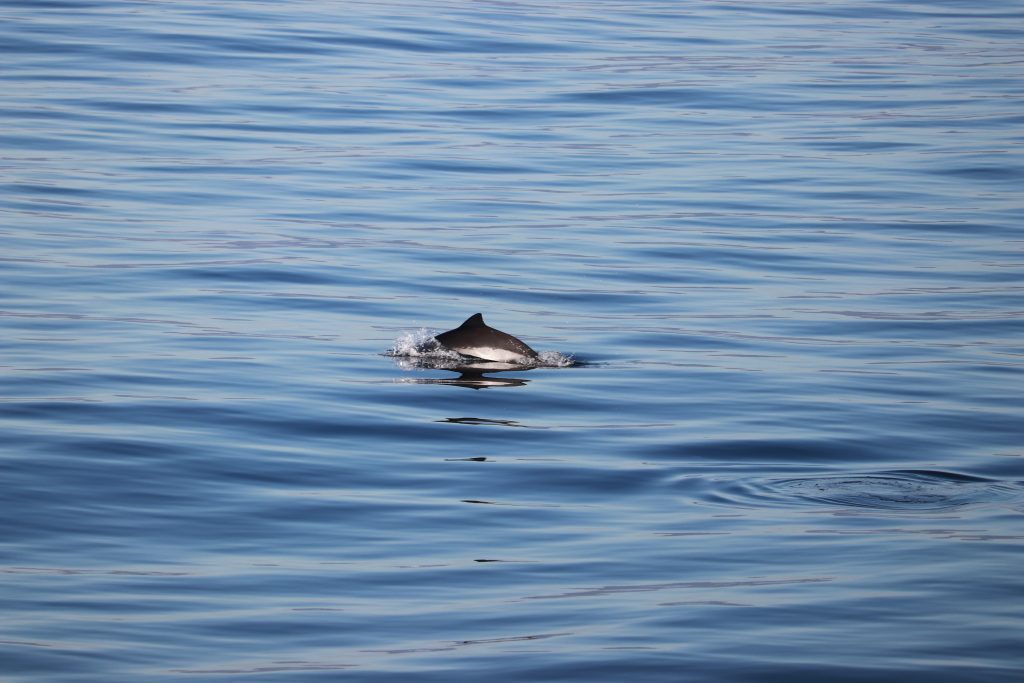
Harbour porpoise (Phocoena phocoena) 

The smallest cetacean to be found in Iceland, harbour porpoises are probably quite common – however, they are very difficult to spot! They are a shy species that typically avoid boats, and they don’t breach or bow-ride like dolphins. In grey, choppy waters they look an awful lot like waves! It takes a lot of luck and a good eye to see a harbour porpoise here. 


Best place to see them? 

Whales and whale watching in Iceland

What to look out for: 


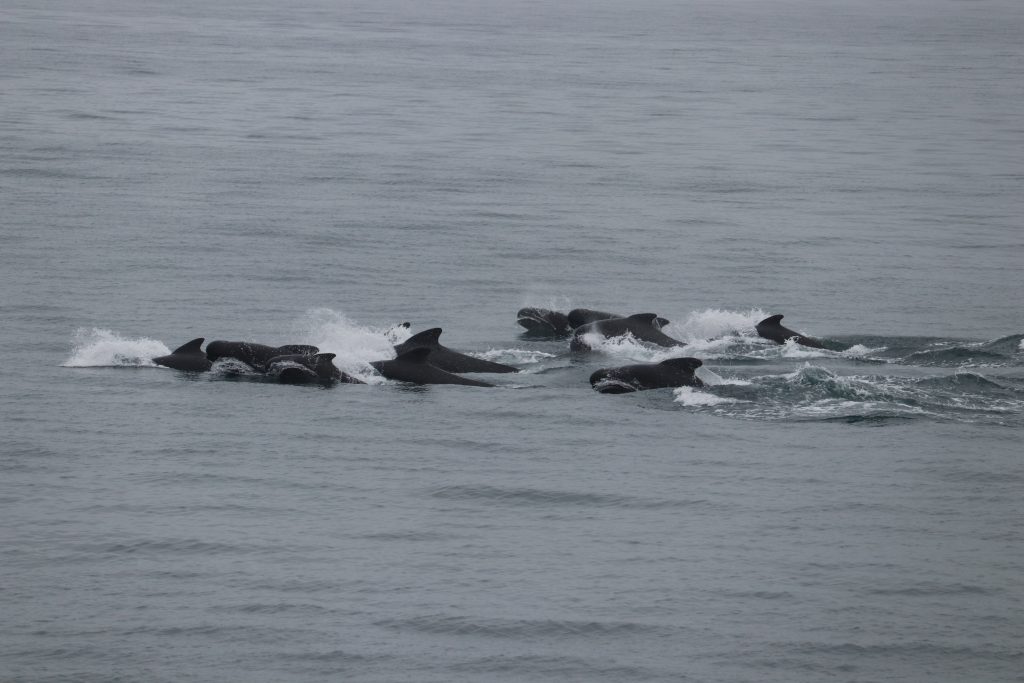
Long-finned pilot whale (Globicephala melas) 

Long-finned pilot whales are another large dolphin species. They feed at depths of 200m or more and are found most often in areas of deep water. Pilot whales do on occasion come into shallower water, which can lead to a mass stranding – something this species is unfortunately famous for. 


Best place to see them? 

Whales and whale watching in Iceland

What to look out for: 


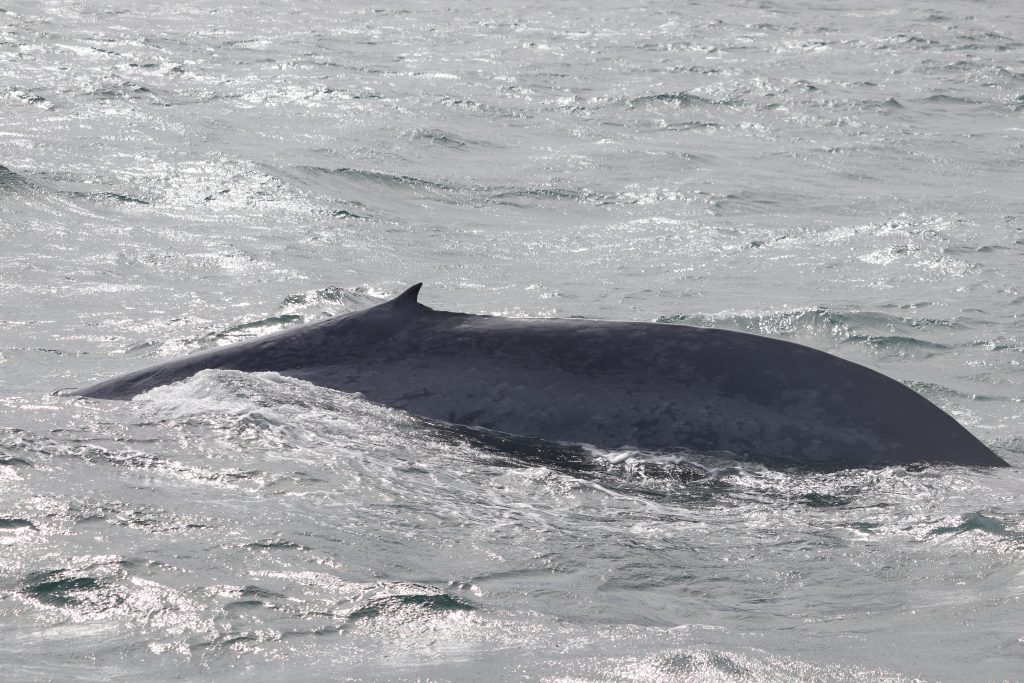
Blue whales (Balaenoptera musculus) 

The largest animal on Earth can be seen in Icelandic waters during summer when, like the humpbacks, they come to take advantage of the massive supply of food here. Blue whales in Iceland are part of a larger population that inhabits the whole Northeast Atlantic. Some blue whales photographed off the Icelandic coast have been resighted as far away as Svalbard, the Azores, and Mauritania! 

Blue whales have not recovered quite as rapidly from commercial whaling as the other baleen whales, but sightings did increase from about 1970 until the turn of the century – particularly in the north and west. 


Best place to see them? 

Whales and whale watching in Iceland

What to look out for: 


Whale watching – by land or by sea? 

Going whale watching on a boat gives you the best chance of seeing whales. By getting out into more open water and into their environment you can get much closer to them, and experience whales and dolphins in their home. 

But it is also possible to see whales from land, if you get lucky! 

The team at Whale Wise have created a series on the best spots in Iceland to see whales from land – check it out on their Facebook or Instagram! These locations have been identified as particularly good whale watching sites based on a combination of researchers’ experiences in the field and local knowledge. 

Whales and whale watching in Iceland

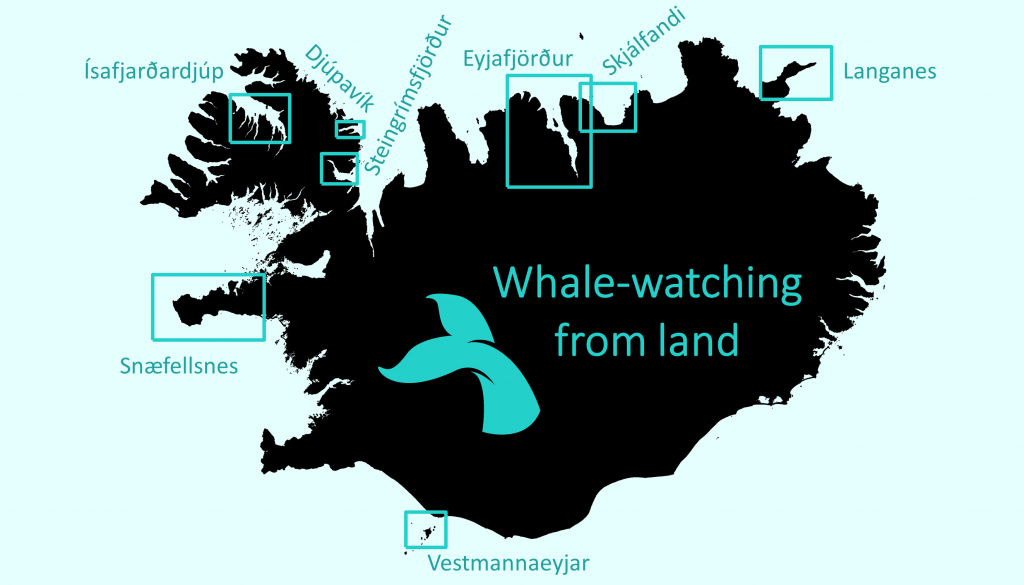
Here are some parts of Iceland where you can see whales from land. If you’re in these regions, be sure to keep one eye on the sea – you never know what will pop up! Image from Whale Wise. 

The Iceland Whale Sightings Facebook group is another great resource for whale watchers and budding citizen scientists; check for any recent sightings in your area of Iceland, and share your own encounters! 

Finally, remember: nature is unpredictable, and wildlife is, well, wild! Even in a cetacean hot-spot like Iceland you can never be completely sure that whales will show up when you need them to. But by following the advice in this guide, you can maximise your chances of a successful whale-watching trip – whether it’s by land or by sea. 


Good luck, and happy whale watching!

Author: Eilidh O.
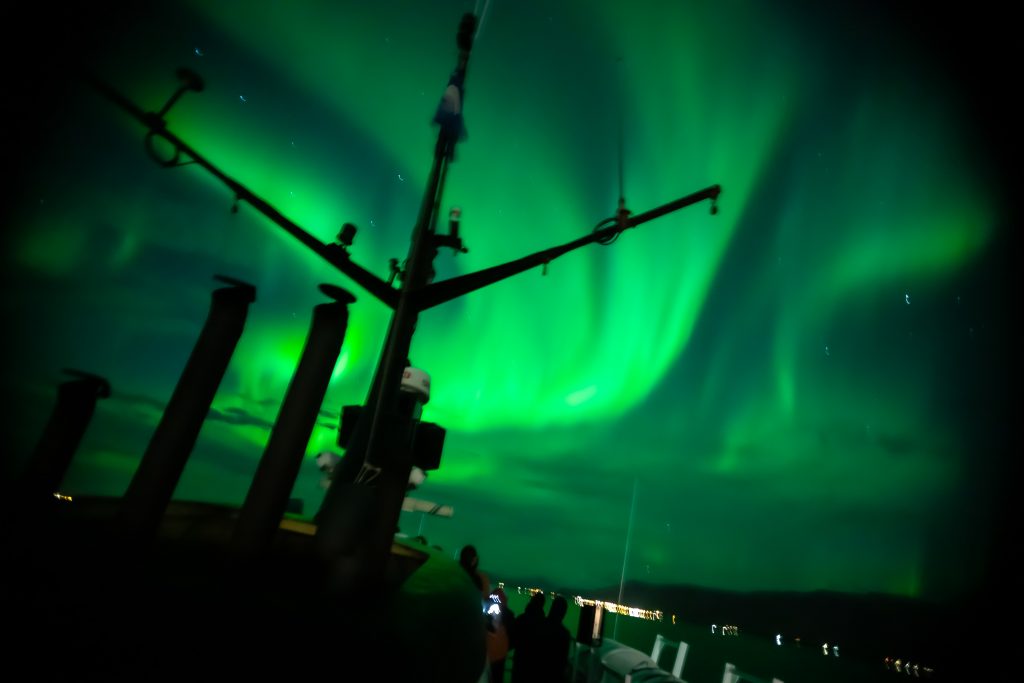
If you’re lucky enough to see the Northern Lights during your Iceland trip, it will be a lifelong memory. These fickle green and purple ribbons dance across darkened skies when high levels of solar activity coincide with clear, cloudless skies. They’re not guaranteed, but when they do show up, it’s a truly magical sight. Now, let’s prepare you for a pleasant evening (hopefully) witnessing the spectacle – let’s look at what to bring on your northern lights boat tour.

What To Bring On Your Northern Lights Boat Tour

The Northern Lights and summer don’t go together

The long hours of daylight make sightings of the Aurora Borealis impossible. Instead, you’re most likely to catch a glimpse of them between September and April, which means you’re going to need to dress for cold temperatures. The uncertainty associated with aurora hunting means that there’s likely to be a far amount of down time, either waiting for the lights to show, or while you watch them dance. Here’s what we suggest you should bring on your Northern Lights boat tour.


The right kind of base layer is essential

Getting the base layer right is crucial. The job of the piece of clothing closest to your skin is to make sure it doesn’t get damp. If it does, you start to feel cold. So you need something that will absorb sweat and wick away that moisture. Synthetics and wool such as merino are excellent in this respect; cotton is not as it doesn’t dry out once wet. Opt for long sleeves, of course.


What to put on top

Over your base layer, add a decent fleece or a thick wool jumper. Warm air is trapped between the layers and that will prevent you from feeling the cold. A high performance outer layer, preferably one that’s windproof, should keep you warm and toasty. Don’t forget your legs: they too will feel the benefit of thermal leggings or long johns beneath a pair of ski trousers.

What To Bring On Your Northern Lights Boat Tour

Happy feet

Two pairs of socks, ideally merino wool, inside some thick-soled boots such as ski boots or heavy duty walking boots, should keep your feet from being freezing cold. You might also consider thermal insoles, but check your boots will still fit! Choosing something with a good grip is also a consideration.

Remember to take care of your extremities

Lastly, keep your extremities cozy. Scientists have debunked the theory that we lose most of our body heat through our head, but it still makes a lot of sense to put something on it. Along with a suitable hat, pop on a scarf or snood to protect your neck and lower face from the elements. Padded gloves are a good idea, but if you plan to use a camera then they’re not very practical. You can buy gloves with conductive tips on each finger. These let you operate a touch screen, such as on your camera or mobile phone.

Recording the occasion

Most of us like to record those special moments when we travel and seeing the Northern Lights are definitely going to fall into that category, so take your camera or smartphone. Make sure you know its settings inside out and don’t underestimate the number of photos you’ll take – make sure you have plenty of memory available. Battery life is impacted by extreme cold. Bring spares and keep them in a warm pouch so that you can swap them over when required.

Follow these guidelines and you’ll be well prepared for your Northern Lights boat tour. Now all you need to do is cross your fingers and hope they appear!

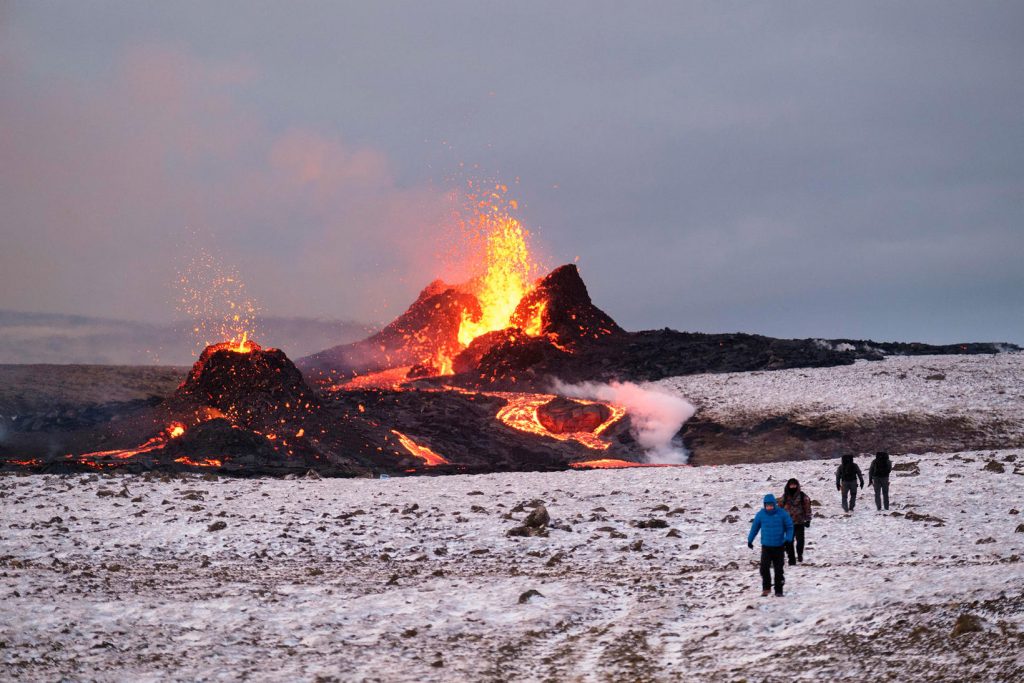
Fagradalsfjall is a mountain located in the Geldingadalir valley on the Reykjanes Peninsula in the south of Iceland.

It is classified as a tuya, which is a steep volcano that is flattened on the top, formed when lava erupts under a glacier or ice sheet. Fagradalsfjall has been dormant for roughly 6,000 years, but is now active again as a shield volcano eruption. The Reykjanes peninsula is part of a volcanic system. The last eruption on the peninsula was roughly 800 years ago when an eruption event occurred in the 13th century. This eruption at Valahnúkur lasted from 1210-1240. The current eruption event is not the formation of a new volcano, but instead fissure eruptions and large amounts of lava flow escaping from beneath the earth. This area has over 50,000 earthquakes in the weeks before the eruption began on March 19th, 2021. The eruption is being called Geldingadalsgos (Geldingadalur eruption).

As of April 14th, eight additional fissures have opened around the original eruption site.

The original fissure eruption was between 500-700 meters long. It began to build up and break down spatter cones, which are mounds of cooled lava. The fifth and sixth fissures opened on April 13th, and two additional fissures were reported on the 14th. The lava continues to build spatter cones and lava flows continued into the Geldingadalir and Meradalir valleys. All of the openings appear to be along the same volcanic fissure and appear to have no impact on the lava flow. Additional fissures are expected to open and visitors are advised to take care. Scientists at the University of Iceland published data on April 12th that indicates that the lava covers a surface area of roughly 0.75 km/2. The lava output is estimated to be around 5-8 m3/s. The lava emerging from the eruption is believed to come from a magma reservoir in the mantle, roughly 17-20 km below the crust. The eruption site has released sulfur dioxide, carbon dioxide, and hydrogen fluoride. This gas pollution has been heavy around the eruption site during some days, causing the authorities to temporarily close for public safety.

The eruption site is proving to be a popular attraction for locals and tourists alike.

From the beginning of the eruption to April 13th the Icelandic Tourist Board reported that some 41,923 people had visited the eruption site. Videos and photos have been posted of people playing volleyball, cooking hot dogs and roasting marshmallows, and having picnics. There have also been proposals and even a wedding at the site! There are some potential dangers of high levels of gas pollution. Otherwise, Fagradalsfjall poses no immediate danger to surrounding areas as the eruption site is not near any roads or inhabited places. This is also a different type of eruption than Eyjafjallajökull in 2010, which released huge amounts of ash into the air causing massive flight interruptions across Europe. There is a small chance that the eruption could reach the roads if the lava flow continues at the same speed for the next several weeks.

You may not have heard of Fagradalsfjall before, but it is a place of significance in several ways.

Fagradalsfjall was the site of a plane crash on May 3rd, 1943. The crash killed fourteen people, including Lieutenant General Frank Maxwell Andrews. Andrews was a senior officer of the U.S. Army and one of the founders of the U.S. Air Force. The site was also the location for the famous Icelandic artist Björk‘s music video Black Lake, released in 2015. Fagradalsfjall is also suspected to be a significant archaeological site of a potential pre-Christian burial. Ísólfur at Ísólfsskáli, an early settler of Iceland, is said to have been buried there according to a place name register. An archaeologist was on site to attempt to determine if this area was actually a grave, but unfortunately was unable to confirm before the lava covered it.

Our head guide, Jonathan, visited the eruption site at the end of March. You can see his video here!

The Volcanic Eruption at Fagradalsfjall

Fagradalsfjall Volcanic Eruption – mbl.is/Kristinn Magnússon


The Volcanic Eruption at Fagradalsfjall

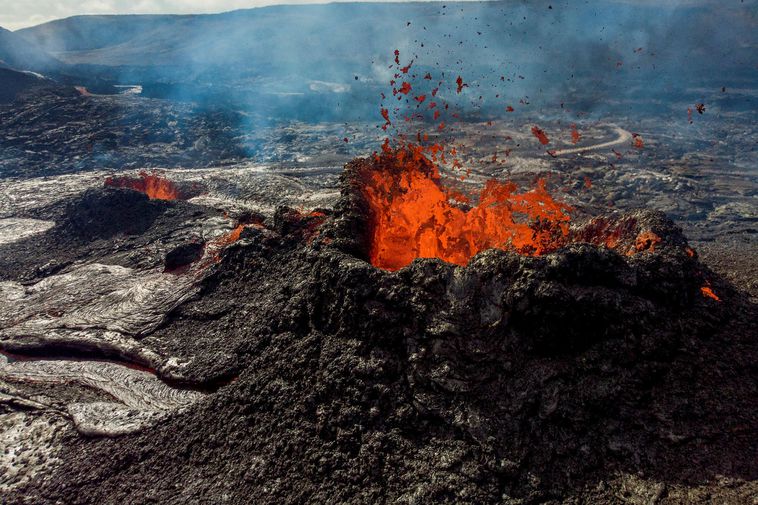
Lava at Fagradalsfjall – mbl.is/Kristinn Magnússon


”How do whales sleep?” is a question our whale watching guides often get during tours, and it is an understandable one – how can a mammal that needs air to survive sleep underwater?

The short answer is that they are conscious breathers and therefore sleep in different ways than land mammals (like us). We are unconscious breathers, so our bodies automatically breathe to take in air even when we are sleeping. Cetaceans are conscious breathers, meaning that they have to make a decision on when to breathe. This might seem complicated for an animal that spends all of its time in the water, but whales and dolphins are experts and are well-adapted to spending their entire lives in the ocean.

All whales and dolphins sleep, but different species have different methods and requirements for sleep and rest. The length of sleep can vary massively between species. There are some common methods and positions for sleeping. These include simply resting quietly in the water, either horizontally or vertically, or sleeping while slowly swimming next to another member of their pod or in small groups.  Dolphins in captivity have been recorded sleeping for brief increments of time at the bottom of their tanks. Humpback whales are often found resting motionless on the surface of the ocean while sleeping. They cannot sleep for much longer than 30 minutes without risking lowering their body temperature due to inactivity.

A very common assumption is that whales sleep with half of their brain ‘shut off’ and one eye closed. The theory is that they do this to maintain an awareness of potential predators or threats that may approach. It is thought that this also allows them to remember to breath at the right time. This behavior has been reported in many different types of dolphins, who can sleep for 2-4 hours at a time. Some dolphins sleep for roughly 33% of the day, while the larger sperm whale is thought to sleep for only 7% of the day!

Boating encounters with sperm whale pods suggest that they enter a deeper sleep than dolphins. In 2008, a small group of scientists working off the coast of Chile happened to encounter a pod of sleeping sperm whales. They were working to record sperm whale calls and were below deck with the engine off when they discovered that they had drifted right into a pod of sleeping sperm whales. It was not until the boat accidentally nudged one of the sperm whales that they noticed the presence of the boat. This is suggestive of a deeper sleep with less acute awareness. The sperm whales swam off and resumed their sleeping.

It is notoriously difficult to study cetacean sleeping behavior in the wild. There is still much to learn about the sleep requirements and patterns of whales and dolphins. We have encountered sleeping whales before on our Whale Watching tours, though it is not common. One one of our morning tours in April, 2015, our boat came across a sleeping humpback. We observed the whale resting just below the surface, coming up every few minutes to breathe. It did not seem to notice the boat and we had the chance to closely watch this gentle giant – a unique and exciting experience!


A pod of sleeping sperm whales. Image: © Franco Banfi/Solent News & Photo Agency

Today is World Whale Day, and things look a bit different this year than they have in the past. Instead of being out at sea on one of our Whale Watching Tours, we are celebrating all of the magnificent cetaceans from our office in downtown Reykjavík. World Whale Day is a chance to celebrate and learn about whales and their massive importance.

Special Tours has been operating whale watching tours from Reykjavík for over two decades. In that time we have had the privilege to meet countless whales, with species including humpbacks, minkes, white-beaked dolphins, harbour porpoises, orcas, and even some rarer species like the blue whale, fin whale, and the North Atlantic right whale. Each and every encounter with a cetacean is a special and valuable experience, and we are so thankful that we get to share these experiences with our passengers.

Conservation and education are both critically important to us. In addition to providing in-depth information during our tours, we work on educational projects with Whales of Iceland in partnership with IFAW, IceWhale, and other tourism companies and organizations. One of our favorite projects is the Fin Whale Room at Whales of Iceland, which focuses on marine conservation. This exhibit looks at the variety of threats that whales face today, and what solutions are available.

Since we cannot be out at sea today, we’re looking back at some of our older photos like the ones below. Whale Watching is not only fun, but also plays a key role in educating people about marine life and the crucial function that whales have within marine ecosystems.

World Whale Day
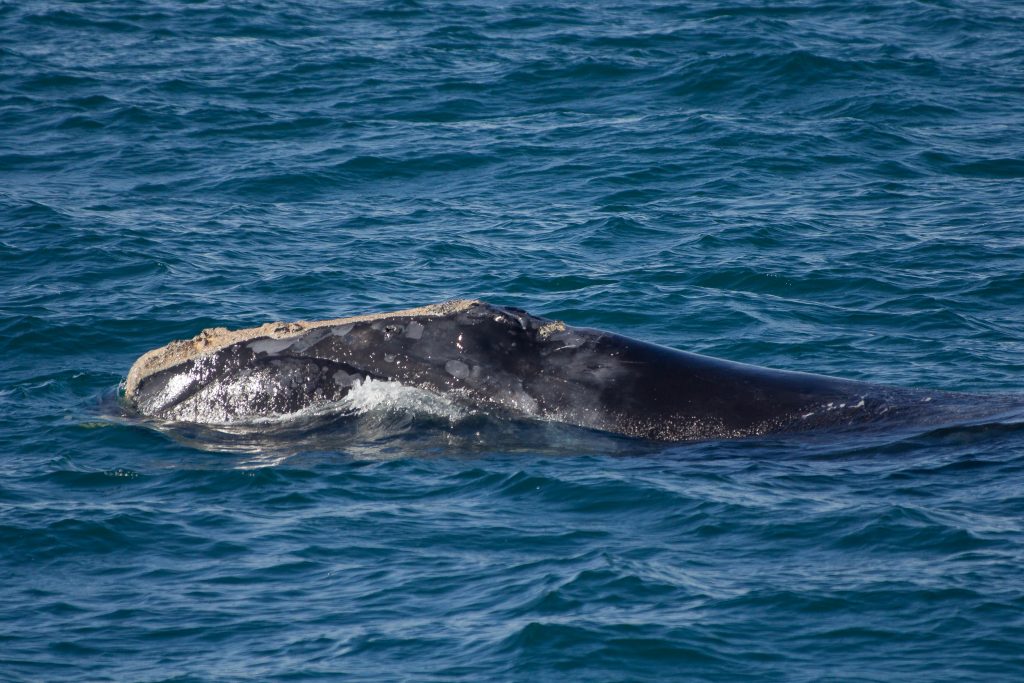
Mogul, a North Atlantic right whale spotted in 2018.
World Whale Day
Two members of a larger pod of orcas.
World Whale Day
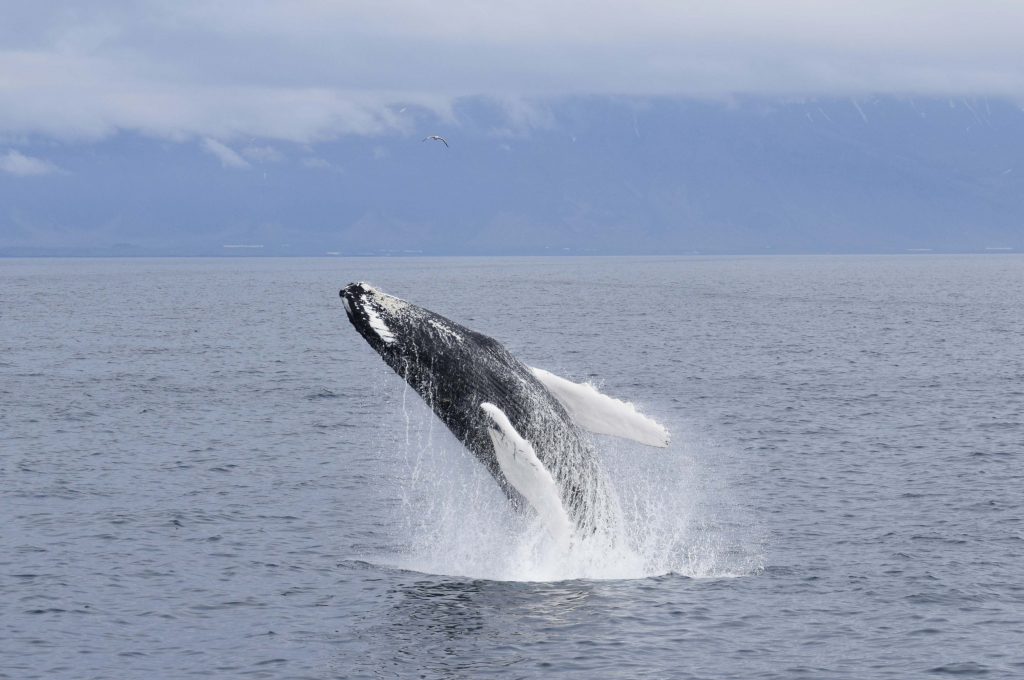
A breaching humpback whale.
World Whale Day
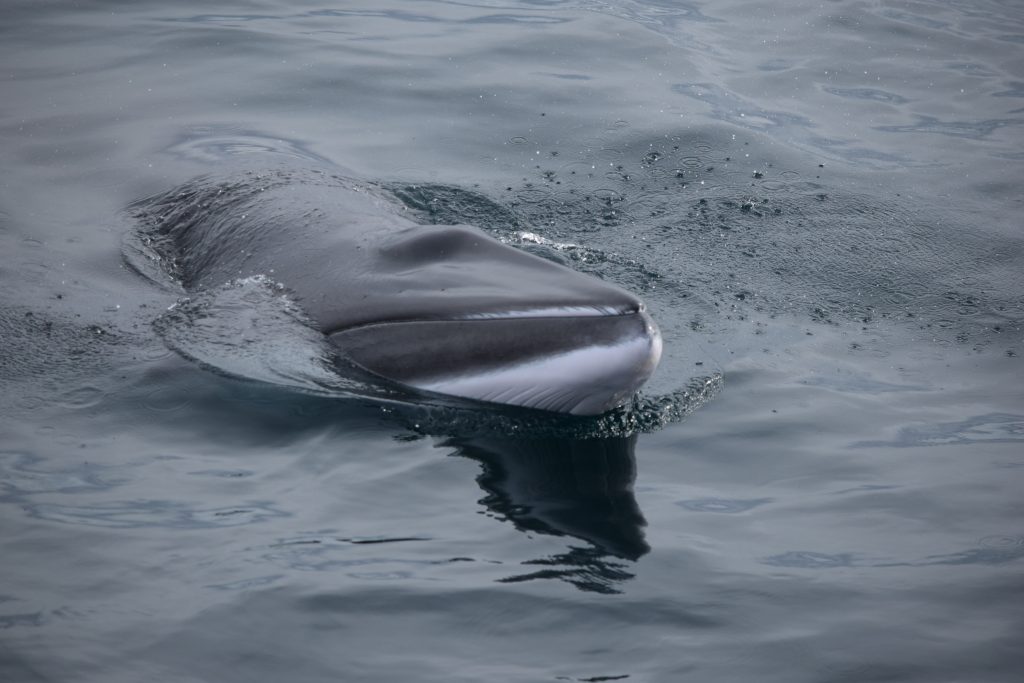
A curious minke inspecting our whale watching boat.
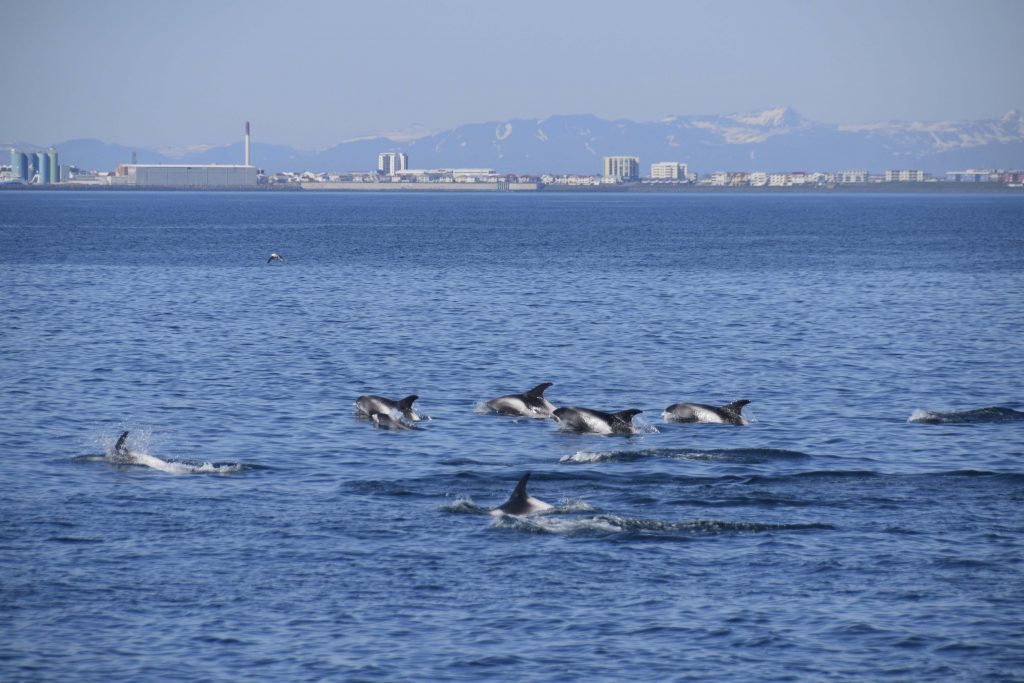
White Beaked dolphins playing around with Reykjavik city skyline in the background - World Whale Day
A pod of white-beaked dolphins.
World Whale Day
An incredible rare sighting of a blue whale.

If you have been on one of our whale watching tours from Reykjavík, on board of Andrea you know that we emphasize on education during the tour. There is for example a small onboard museum in the bow. This is where we sometimes display our plankton sample. We take the sample, with our plankton net, while we sail out in the direction of the whales feeding grounds, in Faxa bay.

Thanks to phytoplankton, Iceland is attractive for whales

What is this magic plankton and why is it important for us, you may ask?

Plankton describes a diverse collection of organisms that are driven by the current. In this blog, we emphasize on phyto- and zooplankton. At the beginning of the marine food chain stands the phytoplankton, single cellular microscopic algae. They are found almost everywhere in the surface layer of the ocean. It is imitated by sunlight and nutrients such as Iron, Nitrogen and Silicate. The nutrients are mainly found in the depth while the photosynthetic active light only penetrates the uppermost layer of the ocean. And that makes our bay, Faxaflói, so productive, it is very shallow. In the winter when the level of sunlight is low there is an intensive mixing going on bringing the nutrients up. Diatoms typically dominate the phytoplankton spring bloom over the Icelandic shelf and afterwards Dinoflagellates increase in abundance. If the conditions are favourable other groups such as coccolithophores multiply rapidly and colour the ocean such as Emiliania huxleyi does every year – that can be seen from space!

Thanks to phytoplankton, Iceland is attractive for whales

In our petri dish on board, we display the zooplankton, in Icelandic water dominated by the copepod Calanus finmarchicus. The biomass in the upper layer is on average 2-4 g dry weight m-2. If you want to read more about the connection of whales and plankton have a look into this blog article.

Thanks to phytoplankton, Iceland is attractive for whales

The trace nutrient Iron is limiting the phytoplankton bloom by 30% in the world’s ocean so called high nitrate low chlorophyll regions (HNLC). In the year 2010 this was for once no limiting factor in Iceland.

On the 14th of April, the volcano Eyjafjallajökull erupted, in the south of Iceland, causing ash to deposited across up to 570,000 km2 of the North Atlantic Ocean. This input of dissolved Iron increased the algae bloom by about 20%.

Life of the minke whale in Iceland has changed dramatically in recent years.

Faxa bay, our whale watching site, became partly a whale sanctuary in 2017. Therefore, hardly any minke whales (Balaenoptera acutorostrata) were hunted in the following seasons. Finally, since the abundance of minke whales in the Icelandic continental shelf decreased by almost 23 percent in the last decade. By signing the petition by our partners, the IFAW you can help to ban whaling in Iceland forever.

The decrease of the population together with dietary changes, may reflect the responses of minke whales to a changed environment possible driven by global warming. In recent years, the Icelandic continental shelf ecosystem has changed due to the increase in sea surface and bottom temperatures. The cold-water species capelin almost disappeared and the stock of krill and sandeel broke in dramatically. Today minke whales consume mainly herring and haddock.
The food itself is not the reason why the minke whale is often called “stinky minke”. The digestive system composes of four compartments with a high density of anaerobic bacteria which digest the food and lead to the awful smell, but you want to smell it, that means it is a close encounter.

Minke whales in a changing Icelandic ecosystem

The minke whale is a baleen whale species. The common minke, whale here in the northern hemisphere, can be identified by the white band on their flippers. The back is usually black or dark grey while the belly is white. They can reach about eight meters with a weight of four to five tons. Minke whales have between 240 to 360 baleen plates on each side of their mouth. You can read here more about how they feed.

Since Faxaflói became a whale sanctuary we encountered significantly more curious young spy hopping minke whales. Normally during an encounter, the whale surfaces about three times before going for a deeper dive. While it surfaces to breath most of the length of the back including dorsal fin and blowholes appear.

The minke whale is fascinating, isn’t is? This is why our partner, the Whales of Iceland museum has an interactive minke whale to explore. In addition, you can drink a coffee sitting under a life size model of these beauties.

Minke whales in a changing Icelandic ecosystem